Author: ahkili

  • How to Soothe Separation Anxiety in Children with Metaphorical Bedtime Stories

    How to Soothe Separation Anxiety in Children with Metaphorical Bedtime Stories

    By Dr. Amel Slim, Child Psychologist • Updated on August 25, 2026


    Key Takeaways :
    Separation anxiety is a natural developmental stage : Whether facing the start of the school year or bedtime routines, over 70% of young children experience separation fears when parting from parents.
    The therapeutic power of metaphor : A child’s emotional brain processes complex feelings and fears much better through allegorical characters than through abstract adult reasoning.
    Ahkili creates personalized, screen-free safe havens : Custom audio stories turn your child into a brave protagonist who discovers inner courage, tames the unknown, and drifts off to sleep peacefully.


    1. Understanding Separation Anxiety in Children: What Happens in Their Brain?

    Separation anxiety is a normal developmental emotional reaction where a young child experiences acute distress when physically parting from their primary attachment figures.

    As the summer draws to a close and the new school year approaches, millions of families deal with tearful morning drop-offs and prolonged bedtime negotiations. While these struggles can feel overwhelming for parents, neuroscience reveals that they reflect an essential phase of brain maturation.

    The Amygdala vs. The Prefrontal Cortex

    In children aged 2 to 8, the prefrontal cortex—the brain center responsible for logic, temporal reasoning, and emotional self-regulation—is still undergoing rapid development. When a parent leaves the bedroom at night or steps away at the school gate, the child’s amygdala (the brain’s emotional alarm bell) triggers an immediate survival response.

    Telling an anxious child “Don’t worry, mommy will be back at 4 PM” appeals to their logical cortex, which cannot yet override the primal alarm of the amygdala. Conversely, telling a soothing metaphorical story activates the calming parasympathetic nervous system and stimulates oxytocin release, restoring psychological safety.

    Common Signs of Childhood Separation Anxiety

    Separation distress does not only manifest as tears at the classroom door. It frequently appears through subtle daily behaviors:

    • Bedtime Resistance: Asking for multiple glasses of water, extra cuddles, or expressing sudden fears of the dark to prolong parent presence.
    • Morning Somatic Complaints: Unexplained stomach aches, nausea, or headaches occurring specifically before leaving for school or daycare.
    • Temporary Behavioral Regressions: Nighttime bedwetting, baby talk, or sudden reluctance to play alone in an adjoining room.

    To understand how evening routines restore emotional equilibrium, explore our guide on the power of bedtime stories to calm children.


    2. Why Metaphorical Stories Are the Ultimate Antidote to Fear of the Unknown

    Metaphorical storytelling allows a child to project subconscious anxieties onto imaginative characters, experience problem-solving from a safe emotional distance, and internalize resilience.

    Stories are far more than simple entertainment to make children drowsy: they are time-tested therapeutic instruments endorsed by child psychoanalysts from Donald Winnicott to Bruno Bettelheim.

    The Mechanism of Psychological Projection and Decentering

    Direct confrontation—such as telling a child “You must be brave at school tomorrow”—often increases performance pressure. In contrast, listening to the tale of Leo the Little Hedgehog venturing into the Great Enchanted Forest provides emotional protection.

    The child identifies with Leo, empathizes with his trembling paws, and witnesses how Leo found courage through a magic glowing acorn. This process allows the child to integrate coping strategies effortlessly.

    Audio Narration as an Invisible Transitional Object

    Screen-free audio storytelling provides distinct neurological advantages:

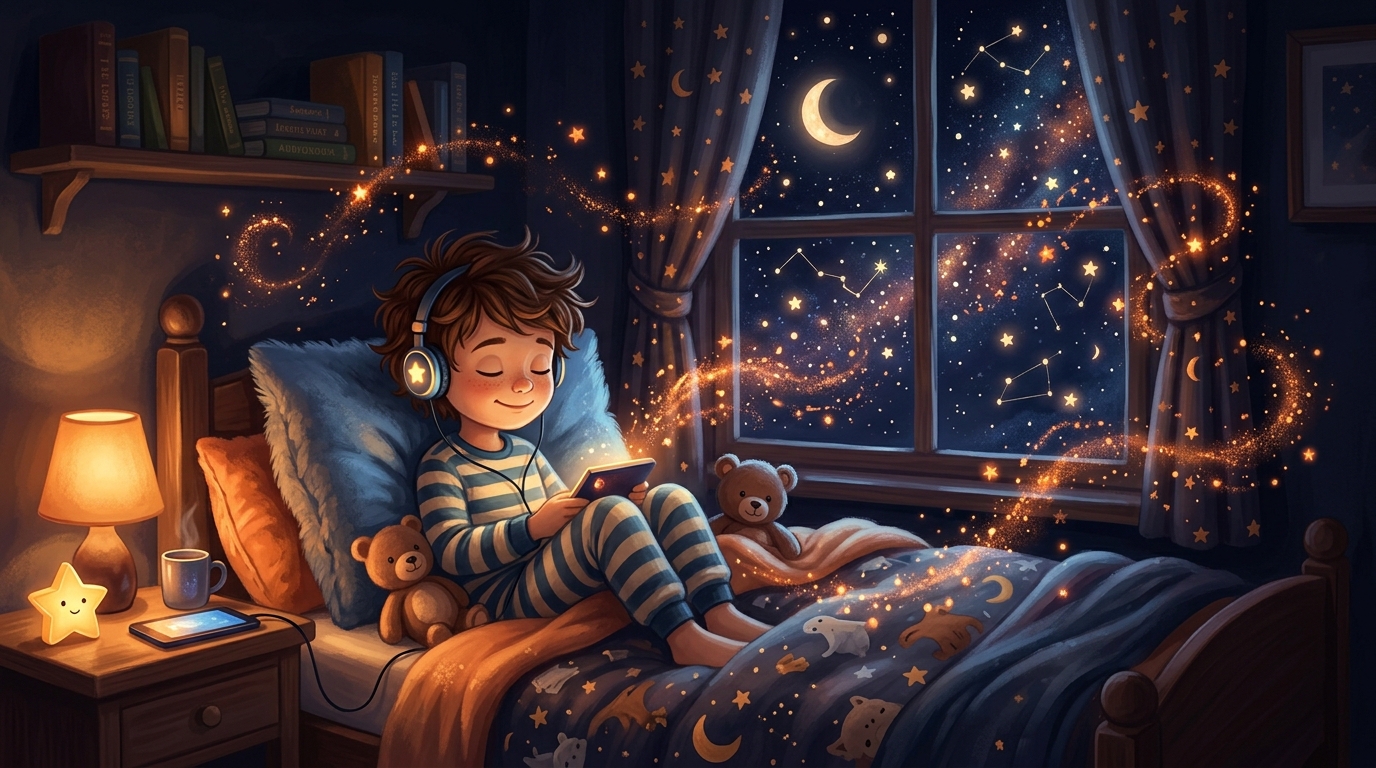
    1. Zero Blue Light Interference: Unlike digital screens that suppress melatonin and overstimulate the visual cortex, audio calms neural frequencies into theta waves ideal for restful sleep.
    2. The Enveloping Safety of Human Voice: A warm, measured voice creates an auditory cocoon, serving as a comforting bridge between active wakefulness and peaceful slumber.
    3. Internal Imagery Generation: Without pre-rendered animations, the child’s mind creates its own gentle mental imagery, boosting self-soothing capabilities.

    To discover practical ways to reduce digital habits before bed, see our recommendations on creative screen-free alternatives for children.


    3. Comparison: 3 Approaches to Managing Evening Separation Anxiety

    Feature Pure Logic & Verbal Reassurance Screen Cartoons / Video Ahkili Metaphorical Audio Stories
    Neurological Target Prefrontal cortex (immature in young kids) Passive visual cortex (cognitive overload) Limbic system & active auditory cortex
    Impact on Sleep Often triggers debates & delays Delays deep REM sleep (blue light) Induces rapid, calm sleep onset
    Emotional Resilience Low long-term autonomy Temporary avoidance of anxiety Long-lasting internal coping mechanisms
    Personalization Constrained by exhausted parents None (generic commercial content) 100% tailored (name, values, specific fears)
    Child’s Role Passive receiver of rules Hypnotized spectator Active, courageous hero of the adventure

    4. 4 Practical Daily Rituals to Tame Separation Fears

    Here are four compassionate, science-backed rituals to help your child navigate separation with confidence:

    1. The “Secret Palm Heart” Ritual

    Before leaving in the morning, draw a tiny heart inside your child’s palm and one in your own. Tell them: “Whenever you miss me, press your secret heart, and mine will warm up to send you a hug instantly.” This tangible sensory anchor reinforces attachment security throughout the day.

    2. The Evening Decompression Audio Break

    After a stimulating day at school, give your child 10 minutes of quiet audio listening. As highlighted in our article on active listening and read-aloud rituals for school preparation, this dedicated auditory pause discharges accumulated sensory overload.

    3. Tailored Bedtime Storytelling with Ahkili

    Create a personalized audio adventure on Ahkili that directly mirrors your child’s current life milestone. Enter their name, favorite animal, and gentle prompt (e.g., “Liam is nervous about making friends in his new classroom”). Ahkili creates a warm, empowering narrative where the hero discovers kindness and bravery.

    4. The Morning Bridge Anchor

    When tucking your child in, focus the final conversation on an exciting morning connection: “Tomorrow morning, let’s make your favorite blueberry pancakes together!” Framing bedtime as a short pause before a joyful reunion removes nighttime dread.

    Learn more about our intelligent audio engine in our review of the official launch of Ahkili personalized audio stories.


    💬 Frequently Asked Questions (FAQ)

    Does separation anxiety mean my child is overly dependent on me?

    Not at all. Separation anxiety is a healthy indicator of secure attachment. It signifies that your child recognizes their safe base and is learning to step into independence gradually at their own pace.

    At what ages does separation anxiety peak?

    Separation anxiety typically peaks during three major developmental milestones: between 8–12 months (stranger anxiety), between 2–4 years (entering nursery or preschool), and around 6–7 years (transitioning to primary school).

    What should I do if my child cries intensely at school drop-off?

    Keep drop-offs loving, brief, and confident. Avoid sneaking away, as this damages relational trust. Hand your child to the teacher with a warm smile; your calm body language communicates that the environment is safe.

    How does a personalized Ahkili story directly reduce bedtime anxiety?

    By incorporating your child’s name and personal world into an imaginative narrative, Ahkili transforms anxiety into an adventure. The child falls asleep identifying with courage and resilience, reprogramming their subconscious outlook for the morning ahead.

    Should I leave a nightlight on during the audio story?

    Yes, a warm amber nightlight offers reassurance without suppressing melatonin production. Combining gentle ambient light with Ahkili’s soothing voice creates a peaceful sleep sanctuary.


    📥 Give Your Child Confidence for Every Morning and Peace for Every Night

    Transform stressful goodbyes and bedtime battles into moments of deep bonding and imaginative growth. Equip your child with custom audio stories tailored to their emotional world.


    This article was created in collaboration with Dr. Amel Slim, Child Psychologist specializing in early cognitive and language development, and pedagogical advisor to Ahkili.


    Download on the App Store
    Get it on Google Play
  • How to Boost Your Child’s Focus and Memory for a Successful Back to School

    How to Boost Your Child’s Focus and Memory for a Successful Back to School

    By Dr. Amel Slim, Child Psychologist • Updated on September 1, 2026


    Key Takeaways :
    Attention is a cognitive muscle that requires daily training : After summer vacation and high-intensity screen exposure, children need a structured transition to regain the sustained listening skills essential in the classroom.
    Audio storytelling engages working memory and mental imagery : Unlike pre-rendered video content, listening to a story forces a child’s brain to construct its own visual landscapes, dramatically improving neuroplasticity and long-term retention.
    Ahkili turns cognitive focus into an enchanting daily habit : Through interactive personalized audio adventures, children build lasting attention spans, richer vocabularies, and the emotional confidence needed to thrive at school.


    1. Back-to-School Attention Drop: What Really Happens in a Child’s Brain?

    The common drop in focus observed when children return to school is driven by a neurological clash between fast-paced summer screen habits and the deliberate, sustained attention demanded in the classroom.

    Every September, parents around the world face a familiar challenge: their child struggles to sit quietly for ten minutes, gets easily distracted during multi-step instructions, or forgets what was said just moments before. Rather than a lack of motivation, this behavior is the natural outcome of cognitive fatigue during rhythm transitions.

    The Dopamine Trap of High-Speed Digital Screens

    During summer breaks, short online videos and fast-paced mobile games deliver a continuous stream of high-frequency audiovisual stimuli. This artificial rhythm triggers frequent micro-bursts of dopamine, conditioning young neural networks to respond primarily to involuntary, bottom-up reflex attention.

    School environments, however, rely on voluntary top-down attention governed by the developing prefrontal cortex. When children sit in a calm classroom without rapid visual scene cuts, their brains experience temporary under-stimulation, frequently mislabeled as hyperactivity or boredom.

    To discover practical ways to balance digital consumption after holidays, check out our guide on creative screen-free alternatives for children.

    Working Memory: The Secret Engine of Academic Learning

    Working memory is the mental workbench where children hold and manipulate temporary information—such as following a teacher’s three-step assignment or solving a mental math problem.

    Studies published in Pediatrics reveal that working memory capacity in children aged 3 to 10 is strongly linked to auditory processing environments and regular active listening habits. When a child follows an audio storyline without visual crutches, their mental storage capacity and information sequencing skills expand significantly.


    2. Why Audio Enhances Memory and Imagination Far Better Than Video

    Audio listening activates internal visualization neural pathways, transforming children from passive media consumers into active creators of their own mental imagery.

    When a child watches a cartoon on a tablet, the character designs, lighting, backgrounds, and pacing are completely predetermined. The visual cortex acts merely as a passive receiver, bypassing the cognitive heavy lifting required for spontaneous imagination.

    Engaging the Default Mode Network and Brain Neuroplasticity

    In contrast, when immersed in an audio story:

    1. Autonomous Mental Visualization : The child’s brain must translate spoken words (“a glowing golden key hidden under ancient oak roots“) into vivid internal pictures. This process strengthens neural bridges between the temporal lobe and occipital cortex.
    2. Alpha Brainwave Induction : A soothing, rhythmic human voice encourages alpha brainwaves, promoting a state of calm alertness ideal for memory encoding and stress reduction.
    3. Contextual Vocabulary Growth : Without distracting on-screen visual clutter, auditory attention zeroes in on pronunciation, narrative syntax, and expressive nuances.

    As we explored in our deep dive into active listening and read-aloud rituals for school prep, auditory storytelling is the single most effective catalyst for verbal intelligence and sustained focus.


    3. Comparison Table: Passive Screen vs Traditional Reading vs Ahkili Personalized Audio

    Learning Dimension Video Cartoon on Screen Traditional Book Reading Ahkili Personalized Audio Story
    Mental Imagery Effort Zero (visuals are imposed) Moderate (guided by illustrations) Maximum (child creates the entire mental world)
    Sustained Focus Impact Fragmented by quick camera cuts High (depends on parent availability) Continuous & High (immersive narrative flow)
    Working Memory Training Low (passive visual intake) Good (page-by-page visual recall) Superior (auditory chronological sequencing)
    Emotional Connection Distant / Third-person viewer Moderate (fictional third party) Complete (child is the central hero)
    Bedtime & Sleep Transition Disruptive (blue light excites brain) Calming Optimal (gentle sensory transition to deep rest)

    Learn more about how our platform is revolutionizing modern family routines in our overview of the official launch of Ahkili personalized audio stories.


    4. 4 Proven Techniques to Strengthen Your Child’s Attention Span This Week

    Here are four simple, research-backed rituals you can implement at home to boost your child’s focus and academic confidence:

    1. The Post-School Sound Decompression Window (5:00 PM)

    After hours in a crowded, noisy classroom, a child’s sensory threshold is overloaded. Instead of switching on the TV or immediately demanding homework, offer a 15-minute quiet audio story break. This enables their nervous system to transition from fight-or-flight overstimulation into calm receptivity.

    2. The “Story Detective” Memory Game

    Before starting an Ahkili tale, give your child a fun listening challenge: “Keep your ears open! At the end of the adventure, tell me what magic word helped the dragon unlock the stone gate.” This turns passive listening into an enjoyable working memory workout.

    3. Tailored Storytelling Prompts in Ahkili

    Use the Ahkili app to weave your child’s real passions (space exploration, dinosaurs, enchanted castles) together with their current classroom challenge (sharing with peers, raising their hand patiently, focusing on drawing). Seeing themselves solve these challenges in an epic quest reinforces intrinsic motivation and positive behavior.

    4. Screen-Free Bedtime Story Ritual for Memory Consolidation

    Brain memory consolidation occurs during slow-wave and REM sleep. A tranquil, screen-free evening routine ensures that knowledge gained during the school day is effectively stored in long-term memory. Read more in our article on the calming power of personalized bedtime stories.


    💬 Frequently Asked Questions (FAQ)

    What is the normal attention span for a child by age?

    As a general developmental rule, a child’s sustained attention span is roughly 3 to 5 minutes per year of age: around 10 to 15 minutes at age 3, 20 to 25 minutes at age 6, and 30 to 45 minutes by age 9 to 10.

    Can audio stories help children with ADHD or restlessness?

    Yes. Audio removes excessive visual stimuli that frequently overwhelm restless children. By directing focus toward a single auditory narrative, it gently trains their capacity to maintain concentration without frustration.

    How does Ahkili support school subjects and homework?

    Ahkili integrates natural educational themes, vocabulary, and moral lessons directly into bespoke adventures, turning abstract learning into emotionally captivating stories that children remember naturally.

    Why do digital screens harm children’s working memory?

    Rapid visual animations overload working memory with transient sensory input, preventing the brain from transferring short-term impressions into durable long-term synaptic connections.

    When is the best time of day for an Ahkili audio story?

    Two times yield the best results: right after school as a calming reset transition, and in the evening at bedtime to support peaceful relaxation and memory consolidation.


    📥 Give Your Child the Superpower of Focus and Imagination

    Make this school year your child’s most joyful and confident yet. Empower their growing mind with personalized audio adventures that build memory, spark creativity, and nurture lasting focus.


    This article was written in collaboration with Dr. Amel Slim, child psychologist specializing in cognitive and language development. Pedagogical advisor for Ahkili.

    Download on the App Store
    Get it on Google Play
  • Active Listening and Read-Aloud Time: Why These Rituals Best Prepare Your Child for Back to School

    Active Listening and Read-Aloud Time: Why These Rituals Best Prepare Your Child for Back to School

    By Dr. Amel Slim, Child Psychologist • Updated August 26, 2026

    📌 Key Takeaways

    • Boosts Cognitive Readiness: Active listening stimulates the auditory cortex, enhancing concentration, memory, and analytical skills crucial for classroom success.
    • Expands Vocabulary & Empathy: Regular read-aloud sessions expose children to complex sentence structures and diverse perspectives, deeply enriching their emotional and linguistic toolkit.
    • Eases Transitions: Establishing predictable listening routines, such as personalized audio stories with Ahkili, reduces back-to-school anxiety and builds a comforting daily rhythm.

    Why is active listening the cognitive superpower of childhood?

    Active listening is a foundational cognitive skill that requires a child to consciously process, interpret, and respond to auditory information. Unlike passive hearing, active listening engages multiple brain regions, directly improving a child’s attention span, comprehension, and ability to follow instructions—making it the ultimate preparation for a structured school environment.

    The auditory cortex vs the visual cortex — what science says

    In our modern, screen-saturated world, children’s visual cortexes are frequently overstimulated by fast-paced imagery and bright colors. While this captures attention quickly, it often leads to passive consumption. On the other hand, focusing on auditory input without visual crutches forces the auditory cortex to work harder.

    When a child listens to a story, their brain must actively decode sounds into words, words into sentences, and sentences into mental imagery. This “heavy lifting” by the auditory cortex strengthens neural pathways associated with sustained attention and working memory. Studies in child development suggest that children who engage in regular active listening exercises, such as listening to The Power of Bedtime Stories, show greater ease in filtering out classroom distractions and focusing on their teacher’s voice.

    Vocabulary, syntax, imagination: the 3 proven benefits

    Active listening to well-crafted narratives provides three distinct developmental advantages:

    1. Vocabulary Expansion: Stories introduce children to words rarely used in daily conversation. When they hear a new word in the context of an engaging plot, they are more likely to deduce its meaning and remember it.
    2. Syntactical Understanding: Exposure to grammatically correct and complex sentence structures helps children internalize the rules of language, naturally improving their own speaking and writing abilities.
    3. Imaginative Capacity: Without images provided for them, children must construct the story’s world in their minds. This active visualization fosters creativity and abstract thinking, skills essential for problem-solving.

    Read-aloud vs audio listening: two complementary rituals

    Both parental read-aloud sessions and independent audio listening are incredibly beneficial, but they serve slightly different developmental purposes. By combining both, parents can create a robust linguistic environment for their children.

    Parental read-aloud time is fundamentally interactive; it involves eye contact, physical closeness, and the opportunity for spontaneous questions and discussions. Audio listening, conversely, promotes independence and deep, uninterrupted concentration as the child navigates the narrative solely through sound.

    What age to start?

    You can never start too early. From infancy, the cadence and rhythm of a parent’s voice provide comfort and early language exposure. Around 2 to 3 years of age, as their attention spans grow, children can begin to enjoy short audio stories. By ages 4 to 6, both read-alouds and audio stories become vital tools for building school readiness.

    Comparison: Parent read-aloud vs Ahkili Audio Stories vs Cartoons/Screen

    Feature Parent Read-Aloud Ahkili Audio Stories Cartoons / Screen Time
    Primary Benefit Emotional bonding & interactive discussion Independent active listening & imagination Visual entertainment
    Cognitive Engagement High (Interactive) High (Active visualization) Low to Medium (Passive)
    Personalization Medium (Choosing books) Very High (Custom heroes and plots) Low (Pre-set content)
    Impact on Sleep Excellent (Calming) Excellent (No blue light) Poor (Blue light disruption)
    School Readiness High (Vocabulary building) High (Concentration and routine) Low

    For parents looking to reduce reliance on screens before school starts, exploring Summer Screen Time Alternatives can provide excellent inspiration.

    5 listening rituals to prepare your child for back to school

    As the new school year approaches, establishing predictable routines is key to minimizing anxiety. Here are five listening rituals to incorporate:

    1. The Morning “Wake-Up” Story: Replace sudden alarms or morning TV with a gentle, energetic audio story. This gently engages their brain and sets a positive tone for the day’s learning.
    2. The Commute Companion: Use the car ride to or from school to listen to a story together. It’s a great conversation starter and makes the transition between home and school enjoyable.
    3. The Post-School Wind Down: After a loud, busy day in the classroom, a quiet 15-minute listening session allows the child to decompress and process their emotions independently.
    4. The Dinner Table Recap: Discuss the story you read or listened to earlier in the day. Ask open-ended questions like, “What would you have done if you were the main character?”
    5. The Bedtime Anchor: The classic bedtime read-aloud remains unmatched. It signals to the body that it’s time to sleep while reinforcing a feeling of safety.

    A fantastic way to implement these rituals is by creating a customized back-to-school narrative. With the Ahkili app, you can generate a story featuring your child as the hero tackling first-day jitters.

    How Ahkili transforms listening into a personalized adventure

    Every child is unique, and their stories should be, too. Since the Official Launch of Ahkili, parents have discovered a powerful tool to engage their children’s imaginations through fully personalized audio tales.

    Ahkili leverages advanced AI to craft stories based on the exact parameters you set. Whether your child is anxious about making new friends or excited to learn math, you can weave these themes into an engaging narrative.

    Example prompt:
    ‘Plume the little bird discovers his new school. He is nervous because he doesn’t know anyone, but he learns that sharing his favorite seeds helps him make a new friend, Leo the squirrel. The story should be gentle, encouraging, and focus on the joy of learning.’

    Within moments, Ahkili generates a beautifully narrated audio story. Hearing a character navigate the exact situation they are facing provides children with emotional blueprints for real-life challenges.

    💬 Frequently Asked Questions (FAQ)

    At what age does a child benefit from being read to?

    Children benefit from being read to from the very day they are born. In the first year, it’s about the soothing tone of your voice and exposure to language patterns. By toddlerhood, it actively builds vocabulary and comprehension skills.

    What’s the difference between listening to an audio story and watching cartoons?

    Audio stories require active listening, meaning the child must use their imagination to visualize the scenes, which heavily exercises the brain. Cartoons provide both audio and visual input, making it a passive experience that requires less cognitive effort.

    How much time per day should you dedicate to reading with your child?

    Most experts recommend at least 15 to 20 minutes of dedicated reading or active listening time per day. Consistency is more important than duration.

    Can audio stories replace reading with parents?

    No, they are complementary. Reading with a parent provides crucial emotional bonding and interactive Q&A. Audio stories are excellent for fostering independent listening skills and providing screen-free entertainment.

    How to adapt audio stories to my child’s age?

    For younger children (2-4 years), choose shorter stories (3-5 minutes) with simple plots. For older children (5+ years), you can select longer narratives with more complex conflicts. Apps like Ahkili allow you to tailor the complexity perfectly to your child’s developmental stage.

    📥 Start Your Child’s Next Adventure Today

    Give your child the gift of imagination and a head start for the school year. Create their personalized hero’s journey tonight.

    👉 Try Ahkili Free on the App Store
    👉 Download Ahkili on Google Play


    About the Author:
    Dr. Amel Slim, Child Psychologist
    With over 15 years of clinical experience in child development and pediatric psychology, Dr. Amel Slim specializes in cognitive therapies and early childhood education. She is a passionate advocate for mindful parenting and the profound impact of storytelling on a child’s emotional and intellectual growth.

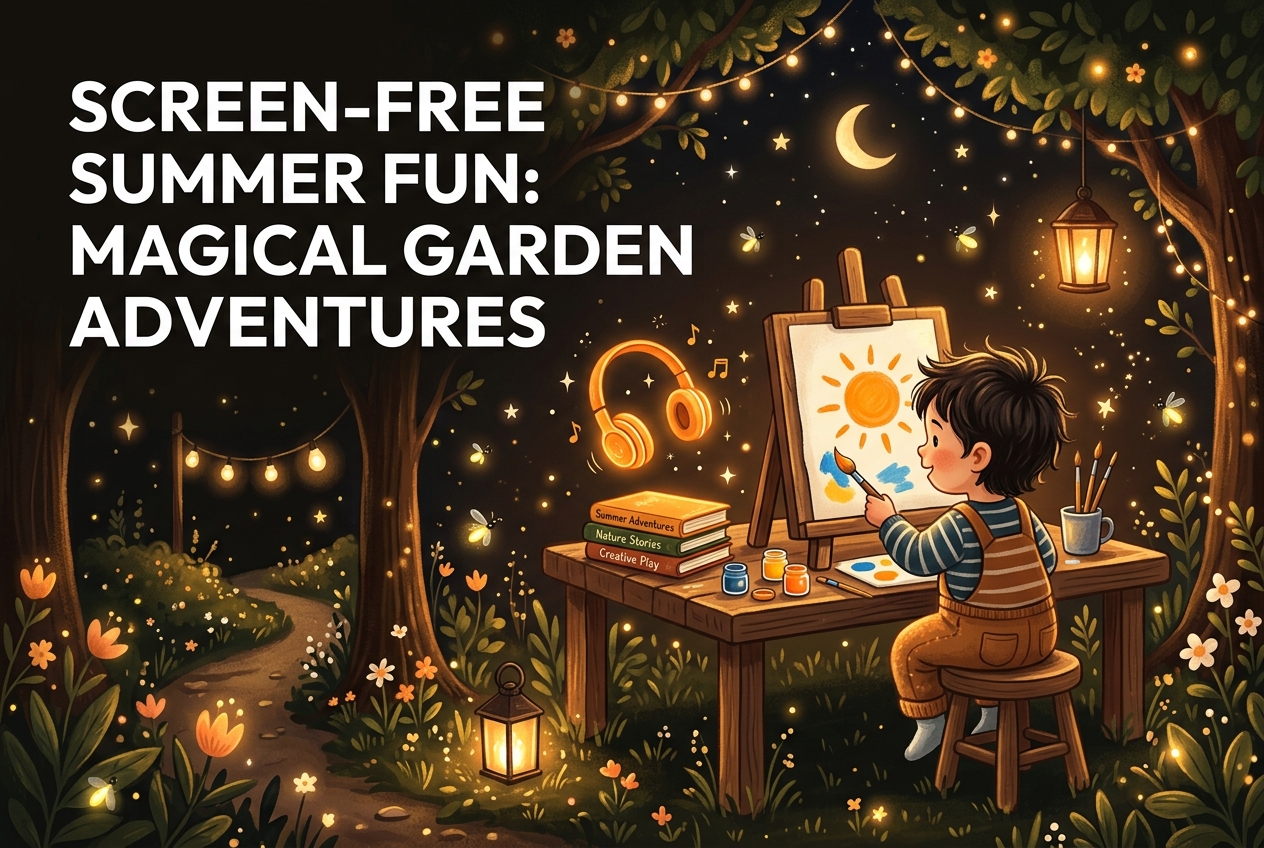
  • Summer Screen Time: 7 Creative Screen-Free Alternatives to Keep Your Kids Engaged

    Summer Screen Time: 7 Creative Screen-Free Alternatives to Keep Your Kids Engaged

    By Dr. Amel Slim, Child Psychologist • Updated on August 4, 2026

    Key Takeaways

    • Understand the Summer Surge: Recognize why screen time increases during holidays and how it impacts your child’s sleep and cognitive development.
    • Implement Creative Alternatives: Discover 7 engaging, screen-free activities, including building forts, outdoor scavenger hunts, and listening to personalized audio stories.
    • Establish Healthy Boundaries: Learn practical strategies for setting realistic screen limits without causing family friction, promoting a balanced digital detox.

    Why Screen Time Skyrockets During Summer Vacation

    During summer, children naturally spend more time on screens because structured school days are replaced by long, unstructured hours. When parents are busy balancing work and home life, and kids face the inevitable boredom of summer vacation, tablets and TVs often become the default babysitters.

    The combination of extreme heat keeping kids indoors and the exhaustion of parenting during the holidays creates the perfect storm for excessive screen reliance. While it is completely understandable to rely on digital entertainment for a well-deserved break, it is crucial to recognize the impact this has on developing minds. Extended exposure to screens, especially fast-paced videos and games, can lead to cognitive overstimulation. Furthermore, the blue light emitted by these devices suppresses melatonin production, severely disrupting healthy sleep patterns and leading to mood swings and decreased attention spans.

    Understanding these underlying causes is the first step in helping your family transition towards a healthier, more balanced summer routine. If you’re noticing your child is struggling to wind down at night, establishing a calming evening routine is essential. For more insights on this, explore our guide on The Power of Bedtime Stories to see how a screen-free evening can transform your child’s sleep.

    7 Creative Screen-Free Alternatives for Kids

    To break the digital habit, you need engaging alternatives that capture your child’s imagination. Here are seven creative, screen-free activities to keep your kids entertained and mentally stimulated all summer long.

    1. Dive into Personalized Audio Stories with Ahkili

    Audio stories are a powerful tool for a digital detox. They provide the narrative engagement of a cartoon without the visual overstimulation of a screen. With the Ahkili app, you can generate personalized audio stories where your child is the hero of their own adventure. Listening to these tales boosts imagination, improves active listening skills, and provides a calming activity for quiet afternoons or long car rides. It’s the perfect way to keep them entertained while giving their eyes a break. To learn more about how we are revolutionizing storytelling, read about the Official Launch of Ahkili.

    2. Build the Ultimate Indoor or Outdoor Fort

    Transform your living room or backyard into a magical kingdom. Provide your kids with blankets, pillows, cardboard boxes, and chairs, and let their engineering skills take over. Fort building encourages spatial awareness, problem-solving, and independent imaginative play. Once the fort is complete, it becomes the perfect cozy spot to listen to their favorite Ahkili audio story!

    3. Organize a Nature Scavenger Hunt

    Turn a simple walk in the park or a day in the garden into an exciting adventure. Create a simple checklist of items for them to find: a smooth rock, a yellow flower, three different types of leaves, or a feather. This activity promotes physical exercise, observational skills, and a deep appreciation for the natural world, keeping them engaged for hours.

    4. Set Up a DIY Art and Craft Station

    Designate a corner of your home as a creative zone. Stock it with washable paints, clay, recycled materials, glue, and safety scissors. Let them create without instructions. Unstructured art time allows children to express their emotions, develop fine motor skills, and experience the joy of tactile creation away from digital interfaces.

    5. Host a Family Cooking or Baking Session

    Bring the kids into the kitchen and make them your sous-chefs. Whether it’s baking cookies, making homemade popsicles, or assembling mini-pizzas, cooking teaches valuable life skills. It involves measuring (basic math), following instructions, and patience. Plus, the rewarding result is a delicious treat they made themselves.

    6. Create a Backyard Obstacle Course

    Use household items like hula hoops, jump ropes, buckets, and cushions to set up a fun physical challenge. Time them as they navigate the course or let them race against siblings. Physical activity is crucial for burning off summer energy and improving coordination, making it a fantastic alternative to sitting on the couch.

    7. Start a Summer Reading Challenge

    Create a cozy reading nook and set a goal for the summer. Whether they read independently or you read to them, books transport children to new worlds. You can make it interactive by having them draw their favorite scene from the book or act out the characters.

    Comparing Daily Routines: Screens vs. Creative Play

    Seeing the difference a screen-free schedule makes can be eye-opening. Here is a comparison of how different approaches shape a child’s summer day.

    Time of Day A Typical Day With Screens A Typical Day With Creative Alternatives
    Morning Wakes up and immediately asks for the tablet. Sluggish start. Helps make breakfast, engages in a nature scavenger hunt in the yard.
    Midday Hours of continuous video streaming. Irritable when interrupted. Builds an indoor fort; engages in independent imaginative play.
    Afternoon Plays repetitive video games. High energy but low focus. Explores the DIY art station or completes a backyard obstacle course.
    Evening Watches TV until bedtime. Struggles to fall asleep due to blue light. Listens to a personalized Ahkili audio story. Falls asleep peacefully.

    How to Set Healthy Screen Limits Without Conflict

    Setting boundaries around screen time requires consistency and clear communication. Begin by establishing “screen-free zones” such as the dining table and bedrooms, ensuring that screens do not interfere with family connection or sleep.

    Create a visual schedule so your child knows exactly when screen time is permitted and when it’s time for other activities. Instead of abruptly snatching the device away, give them a 10-minute warning before their time is up, which helps them transition smoothly. Most importantly, model good behavior; if you are constantly on your phone, your child will mirror that habit. By replacing screen time with highly engaging alternatives like personalized audio adventures, the transition becomes a positive upgrade rather than a punishment.

    Frequently Asked Questions (FAQ)

    1. How much screen time is appropriate for my child during the summer?

    For children ages 2-5, experts recommend limiting non-educational screen time to one hour per weekday. For older children, 2 hours is a sensible limit, ensuring it doesn’t interfere with physical activity, sleep, and family time.

    2. My kids get extremely angry when I take the tablet away. What should I do?

    This is a common reaction to dopamine withdrawal. Try using a physical timer so the “timer” is the bad guy, not you. Give a 5-minute warning, and transition them immediately into an engaging activity, like an outdoor game or listening to an audio story.

    3. Are all screens bad for my child’s brain?

    Not all screen time is equal. Interactive, educational content (like learning a language or video calling family) is better than passive consumption (like endlessly scrolling short videos). However, all screens emit blue light, so moderation is key.

    4. How can personalized audio stories help with digital detox?

    Audio stories remove the visual overstimulation of screens while still providing an engaging narrative. They satisfy a child’s desire for entertainment, stimulate their imagination, and help them wind down, making them an excellent transition tool.

    5. How do I entertain my kids when I have to work from home during the summer?

    Set up safe, independent play stations before you start working. Activities like building blocks, art supplies, or a playlist of Ahkili audio stories can keep them safely engaged while you focus on your tasks.

    Discover the Magic of Screen-Free Entertainment

    Ready to transform your child’s summer vacation? Give their eyes a break and their imagination a boost with personalized, immersive audio adventures.

    Download the Ahkili app today and start your first story!

    Download Ahkili on the App Store
    Get Ahkili on Google Play


    About the Author
    Dr. Amel Slim is a certified Child Psychologist specializing in cognitive development and digital well-being in children. With over 15 years of experience, she helps families navigate the challenges of modern parenting, advocating for balanced routines and creative, screen-free engagement. Her expertise ensures that the Ahkili platform is both highly entertaining and developmentally beneficial for young minds.

  • Official Launch of Ahkili: How Personalized Audio Stories Are Transforming Bedtime for Kids

    Official Launch of Ahkili: How Personalized Audio Stories Are Transforming Bedtime for Kids

    Navigating screen time limits and establishing peaceful bedtime routines are top priorities for parents everywhere. Finding an engaging, healthy, and screen-free activity at the end of a busy day has long been a daily challenge. To address this exact need, we are thrilled to announce the official launch of the Ahkili mobile application on iOS and Android.

    Ahkili is a storytelling app that generates personalized audio stories for children, powered by safe and creative AI. By blending your child’s name, interests, daily challenges (such as fear of the dark, starting school, or sharing toys), and core family values, Ahkili creates unique audio adventures narrated by warm, natural human-like voices in seconds.


    Key Takeaways:
    The Child is the Hero: Magical personalization incorporating your child’s name, hobbies, friends, and life lessons.
    100% Screen-Free Alternative: Stimulates auditory imagination while preserving eyesight and deep sleep quality.
    Pedagogical & Emotional Support: Helps children process real-world challenges through gentle story metaphors.


    Why Personalized Audio Stories Transform Bedtime Routines

    Bedtime shouldn’t be a battleground over tablets or television screens. Child psychology studies consistently show that listening to calming audio stories helps children transition into a relaxed state, preparing their minds and bodies for restful sleep.

    When a child hears their own name and life experiences woven into a story, experts call this positive reflexive identification. Children don’t just passively listen—they mentally step into the hero’s shoes, gaining confidence and emotional resilience as story challenges resolve happily.

    To learn more about how bedtime stories foster emotional calm, read our guide on power of bedtime stories.


    Core Features of the Ahkili App

    Ahkili was designed by parents, for parents, prioritizing simplicity, complete content safety, and unlimited creativity.

    1. Tailored Personalization & Educational Themes

    Every child is unique. Ahkili lets you create up to 3 child profiles per account. You can select:

    • Favorite Story Worlds: Space exploration, enchanted forests, friendly animals, magical fairy tales, or everyday life adventures.
    • Sidekicks & Buddies: Include the names of favorite stuffed animals, siblings, or best friends.
    • Moral Values: Instill empathy, honesty, environmental stewardship, kindness, and bravery.

    2. Gentle Guidance for Daily Challenges (Custom Prompts)

    Is your toddler hesitant about brushing their teeth or nervous about their first day at preschool? Ahkili’s AI engine lets you type a quick prompt describing the daily hurdle. The app automatically weaves a charming metaphor that encourages positive habits without lecturing.

    3. Studio-Quality Narration Powered by PlayHT

    All stories are brought to life by studio-quality synthetic voices. Free of robotic monotony, these warm and expressive voices captivate young listeners in English, French, and classical Arabic.


    Comparison: Screen Time vs. Ahkili Audio Routine

    Feature Screen & Video Time (Tablets / TV) Ahkili Audio Stories
    Impact on Sleep Blue light inhibits melatonin production Zero blue light, promotes restorative sleep
    Cognitive Growth Passive visual consumption and overstimulation Active imagination and vocabulary expansion
    Emotional Wellbeing Increased agitation and screen dependency Deep relaxation, self-reflection, and comfort
    Personalization One-size-fits-all generic content Custom-crafted tales tailored to your child
    Content Safety Risk of random ads or unwanted content 100% safe, parent-controlled environment

    What Parents Are Saying

    “Ahkili has completely transformed our bedtime routine. My 6-year-old son falls asleep with a smile, listening to stories where he and his dog explore the galaxy together.”
    David Miller, Parent & Elementary School Educator.


    Frequently Asked Questions (FAQ)

    What age group is Ahkili suitable for?

    Ahkili is designed for children aged 2 to 12 years. Story complexity and vocabulary automatically adapt to your child’s age group.

    Are there any ads in the app?

    No. Ahkili is 100% ad-free to ensure a peaceful, safe, and distraction-free experience for your children.

    Is Ahkili available in multiple languages?

    Yes! Ahkili supports high-quality audio storytelling in English, French, and Classical Arabic (Fusha). You can easily select your preferred language for each story.

    Can I create stories for more than one child?

    Yes. Each parent account allows you to create up to 3 distinct child profiles, so every child has their own personalized library of adventures.

    Where can I download the app?

    Ahkili is available for free download on both the Apple App Store for iOS and Google Play Store for Android devices.


    Download Ahkili Today

    Join thousands of parents who are bringing magic back to bedtime with screen-free, personalized audio storytelling.


    About the Author: This article was reviewed by Dr. Amel Slim, Child Psychologist and Educational Consultant specializing in early childhood cognitive development and healthy digital habits.

    Download on the App Store
    Get it on Google Play
  • The Power of Bedtime Stories: How Custom Tales Calm Children’s Minds

    The Power of Bedtime Stories: How Custom Tales Calm Children’s Minds

    Key Takeaways :
    Soft identification : When the main character shares the child’s name and goes through their challenges, it helps them express their fears.
    Cognitive benefits : Audio listening stimulates active imagination and concentration.
    A screen-free routine : Replacing evening screens with quality audio tales promotes deep and natural sleep.

    The transition to sleep is one of the most delicate moments of the day for a child. Nighttime often represents separation from parents, the darkness of the bedroom, and the unknown of sleep.

    This transition frequently generates what psychologists call nocturnal separation anxiety. To calm this anxiety, offering screens is often counterproductive because blue light blocks the natural secretion of melatonin. This is where the audio alternative makes perfect sense.


    Table of Contents

    1. Bedtime anxiety in children aged 2 to 12
    2. Why personalization changes everything ?
    3. How Ahkili’s custom audio helps your routine
    4. Frequently Asked Questions (FAQ)

    1. Bedtime anxiety in children aged 2 to 12

    The bedtime ritual should not be a source of tension. To help the child release the pressure accumulated during the day, listening to a calm story is an excellent solution. Tales make it possible to soothe the heart rate and focus the mind on a reassuring narrative.


    2. Why personalization changes everything ?

    The metaphorical tale is a powerful support tool. But when the tale is personalized, its psychological impact is decupled.

    By inserting familiar elements (the child’s first name, their stuffed animal, or a challenge they are going through such as fear of the dark), the child projects their own feelings onto the main character. They experience the resolution of the problem vicariously, which releases their inner tensions in a healthy way.

    Evening ritual approach Child’s anxiety level Cognitive stimulation Impact on sleep
    Cartoons / Screens ❌ High (hyper-excitation) ❌ Passive Disturbed sleep
    Ahkili personalized tales Low (soothing) Active (creativity) Deep sleep

    3. How Ahkili’s custom audio helps your routine

    The Ahkili mobile app was designed to accompany parents by offering customizable stories adapted to each profile:

    1. Enter the child’s name, age, and favorite themes.
    2. Choose the current challenge or learning target (sharing toys, starting school, etc.).
    3. Our application generates a magical story carried by a warm and soothing voice, ideal for calm listening in the dark.

    Download on the App Store
    Get it on Google Play

    Frequently Asked Questions (FAQ)

    When is the best time to start listening to an Ahkili story?

    We recommend starting the audio once the child is comfortably settled under the blanket, with the lights dimmed.

    Is the app suitable for a 3-year-old child?

    Yes, Ahkili automatically adapts the vocabulary, story duration, and narration pace according to the child’s age.

    How many child profiles can I create?

    You can create up to 3 different child profiles within the same subscription.

    Are the voices used robotic?

    No, Ahkili uses high-end synthesized voices configured specifically for the storytelling tone, ensuring a warm, natural, and fluid narration.

    What is the average duration of a story?

    The duration typically varies between 5 and 10 minutes, which corresponds to the optimal concentration time of a child at bedtime.

FRAREN