Category: developpement-imaginaire-pedagogie

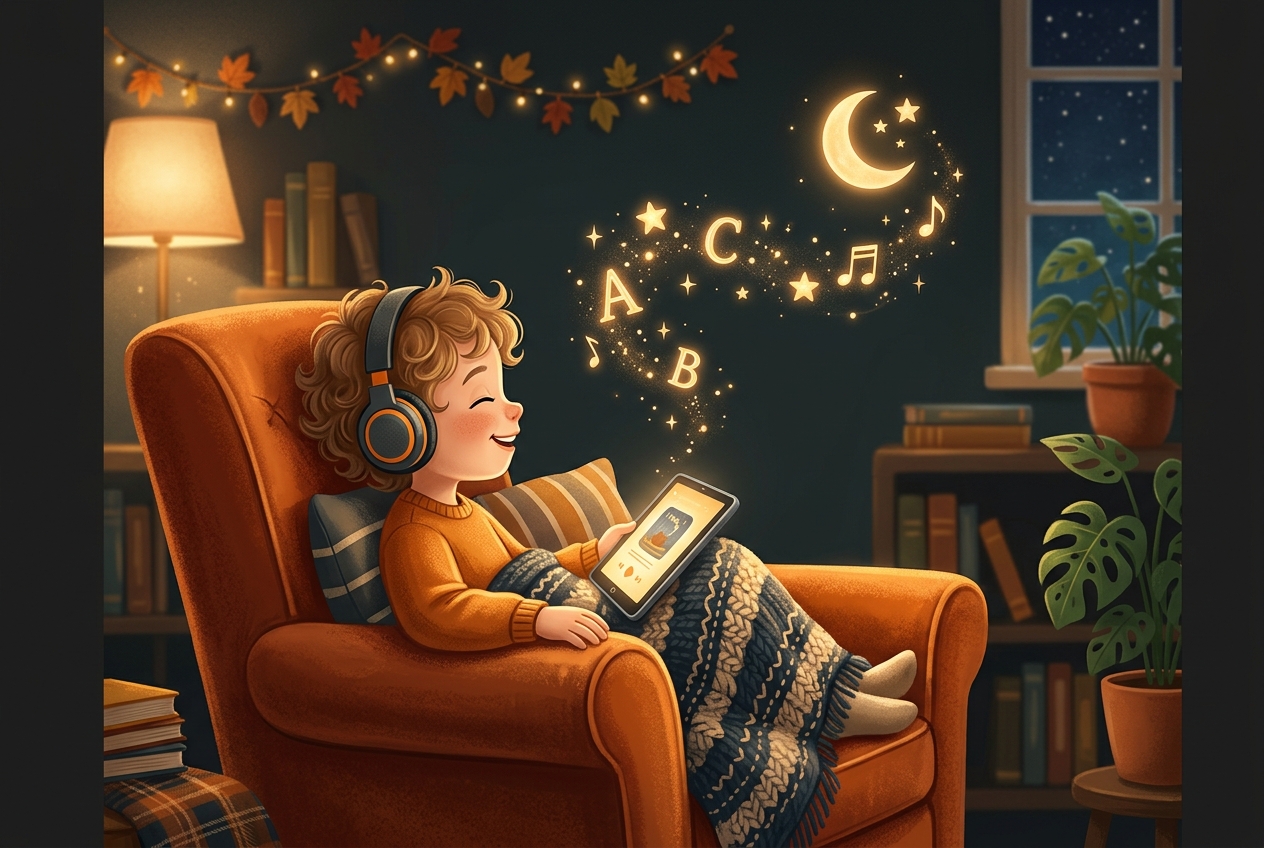
  • How to Boost Your Child’s Language and Vocabulary with Immersive Audio Stories

    How to Boost Your Child’s Language and Vocabulary with Immersive Audio Stories

    By Dr. Amel Slim, Child Psychologist • Updated November 3, 2026

    Key Takeaways for Parents:
    – Active listening builds neural verbal highways: Unlike fast-paced visual screens that do all the imaginative work, audio storytelling requires children to construct mental images, firing language centers in Broca’s and Wernicke’s areas.
    – Narrative context accelerates retention: New vocabulary learned within an exciting emotional story is remembered four times faster than words memorized through flashcards or worksheets.
    – Personalized hero role fuels self-expression: When children hear themselves as the courageous protagonist, their engagement spikes, inspiring them to proudly retell adventures and use advanced vocabulary in daily conversations.

    Between the ages of 3 and 8, children experience a critical window of neuroplasticity for speech acquisition, syntactic grammar, and expressive confidence. Yet, in today’s digital environment, many parents observe shorter attention spans, fragmented sentences, and a reliance on overly simplistic words. Rapid visual entertainment often overwhelms developing senses without demanding deep verbal comprehension. Fortunately, enriching your child’s spoken language doesn’t require dry drills or academic pressure. By introducing immersive, screen-free audio stories where your child becomes the hero of the adventure, you unlock a powerful, natural avenue for language expansion. Through rich narrative storytelling, children effortlessly absorb nuanced vocabulary, master expressive sentence structures, and find their authentic voice with joy and confidence.


    Why Audio Storytelling Supercharges Brain Language Development

    Listening to spoken stories activates auditory processing and semantic memory networks far more deeply than passive screen watching.

    The neurobiology of listening versus watching

    Video entertainment delivers visuals and sound simultaneously, eliminating the mental synthesis needed to process complex words.

    When children watch animated videos, their visual cortex is bombarded by rapid frame changes, leaving little cognitive capacity for verbal reflection. In contrast, audio storytelling invites the brain into what researchers call “the theater of the mind.” The young listener must decode phonemes, access conceptual memory, and actively imagine landscapes, colors, and characters. Neuroimaging studies reveal that this auditory visualization strengthens the arcuate fasciculus—the key white matter tract connecting speech comprehension with vocal articulation. This deep cognitive engagement builds directly upon the foundational benefits of active listening and read-aloud routines, turning bedtime and travel into prime language-learning opportunities.

    The power of literary vocabulary in spoken narratives

    Well-crafted spoken tales expose children to sophisticated descriptive words rarely heard in routine household instructions.

    Everyday parenting speech is naturally pragmatic: “brush your teeth,” “put on your shoes,” “finish your lunch.” While necessary, these repetitive phrases do not expand linguistic horizons. Immersive audio stories, on the other hand, naturally introduce evocative adjectives (“luminous,” “courageous,” “mysterious”), logical transitions (“consequently,” “meanwhile,” “nevertheless”), and vivid verbs. Hearing these sophisticated terms pronounced clearly within captivating storylines enables children to deduce meaning from context without tedious repetition.


    3 Core Drivers That Turn Audio Stories into Confident Speaking

    Meaningful vocabulary acquisition relies on emotional resonance, expressive vocal cadence, and positive dialogue following each story.

    1. Emotional connection through Ahkili’s personalized storytelling

    When children hear their own name and interests in the story, selective attention reaches its peak.

    Standard audiobooks can be enjoyable, but personalized stories created on Ahkili take engagement to another level. Whether saving a magical forest or exploring distant planets, hearing their own name woven into the plot triggers a release of dopamine and endorphins. This emotional connection cements long-term memory. When the storyteller recounts how your child solved a riddle with clever bravery, that empowering experience also works wonders in helping shy children find their voice and build self-confidence, motivating them to speak up with pride in classroom settings.

    2. Expressive prosody and clear phonological modeling

    High-quality narrators demonstrate proper pronunciation, vocal pacing, and emotional nuance that guide children’s speech.

    The melodic rise and fall of expressive storytelling teaches children how tone conveys intent—humor, wonder, suspense, or warmth. By isolating subtle acoustic cues without competing visual noise, young ears become finely tuned to phonetic distinctions. This auditory clarity prevents speech slurring, reinforces clear pronunciation, and lays the vital groundwork for early literacy and phonics.

    3. Spontaneous retelling and narrative structuring

    Prompting your child to recount what happened turns passive vocabulary into active verbal eloquence.

    After an audio session, take two minutes to ask playful open-ended questions: “How did your character solve the puzzle?” or “What was the most exciting discovery?” Retelling the narrative in their own words encourages children to organize ideas chronologically (beginning, conflict, resolution) and experiment with the rich phrases they just absorbed.


    Screens vs Audio Stories: Guarding Your Child’s Linguistic Growth

    Switching evening tablet use for immersive audio prevents neurological overstimulation while expanding expressive fluency.

    During autumn and winter, shorter daylight hours and cold weather keep families indoors, making tablets an easy default. However, pediatricians consistently warn that excessive digital exposure leads to after-school screen fatigue and cognitive overload, which suppresses verbal interactions and delays expressive language. Replacing screens with soothing audio tales provides comforting relaxation while fueling linguistic creativity.


    Comparison Table: How Daily Media Affects Child Language & Vocabulary

    Here is how common media formats compare in nurturing verbal fluency and vocabulary among children aged 3 to 10:

    Evaluation Criteria Video Cartoons & Fast Clips Everyday Casual Talk Ahkili Personalized Audio Story
    Mental Imagery Required Zero : scenes are fully rendered on screen Moderate : tied to tangible immediate tasks Maximum : child actively creates imaginative worlds
    Vocabulary Sophistication Low to repetitive (sound effects, short slang) Standard conversational phrases Rich literary lexicons, metaphors, varied adjectives
    Retention of New Words Fleeting due to rapid visual overstimulation Varies based on parental interaction time High and lasting through emotional resonance
    Incentive to Speak & Express Passive : child remains silent and fixated Routine : one-word replies to instructions Strong : child enthusiastically retells the plot
    Impact on Mental Fatigue High ocular strain and evening restlessness Calming but lacks narrative stimulation Deeply calming, ideal for afternoon rest and bedtime

    4 Easy Daily Habits to Boost Your Child’s Vocabulary at Home

    Incorporate these playful routines into your week to foster a rich and confident expressive voice.

    1. The daily “mystery word” challenge

    Before starting an Ahkili story, give your child a mystery word to listen for (such as “adventurous” or “brilliant”). Celebrate when they catch it, and discuss what it means in a fun context.

    2. Screen-free listening during car rides or afternoon snacks

    Swap background radio or video tablets for an engaging audio episode on the ride home from school or during cozy snack time. It effortlessly sparks organic family conversations.

    3. Co-creating stories on the Ahkili app

    Let your child choose their character companions, dream setting, and moral themes. Selecting these elements encourages them to verbalize preferences and expand their descriptive abilities.

    4. The playful family news reporter

    Encourage your child to “broadcast” their latest audio adventure to a grandparent, sibling, or parent who wasn’t there. This public speaking practice builds immense communicative confidence.


    Frequently Asked Questions (FAQ)

    At what age do audio stories start benefiting a child’s vocabulary?

    Children benefit from audio storytelling as early as 2.5 to 3 years old. Short 3- to 5-minute narratives with clear vocal tones stimulate auditory comprehension and encourage natural vocal imitation.

    Can personalized audio stories help a child with minor speech delays?

    Yes. Speech-language pathologists frequently recommend structured audio stories. They provide a predictable, stress-free linguistic environment that reinforces proper pronunciation and grammatical patterns without fear of judgment.

    How much audio listening time is recommended per day?

    Just 15 to 20 minutes daily—whether during the post-school wind-down or bedtime routine—is ideal for boosting vocabulary without causing auditory fatigue.

    Why is Ahkili more effective than regular audiobooks for vocabulary?

    Hearing their own name, chosen values, and familiar friends woven into the story captivates children’s full attention. This personal relevance activates deeper emotional pathways, resulting in significantly higher word retention.

    How can I tell if my child is actually learning new words from stories?

    Notice whether your child weaves new adjectives into their pretend play with toys, or listen for spontaneous storytelling during car rides and dinner discussions.


    Cet article a été rédigé en collaboration avec Dr. Amel Slim, psychologue infantile spécialisée dans le développement cognitif et langagier de l’enfant. Conseillère pédagogique pour Ahkili.

    Download on the App Store
    Get it on Google Play
  • How to Help Your Child Tame Anger and Big Emotions Through Personalized Bedtime Stories

    How to Help Your Child Tame Anger and Big Emotions Through Personalized Bedtime Stories

    By Dr. Amel Slim, Child Psychologist • Updated October 20, 2026

    Key Takeaways:
    – Brain immaturity, not misbehavior : Under age 6 or 7, a child’s prefrontal cortex is still maturing; when frustration strikes, the amygdala triggers an intense physiological surge that the child cannot yet regulate through logic alone.
    – The healing power of narrative metaphors : By identifying with a brave character who tames a playful inner dragon or cools an imaginary volcano, children acquire coping tools and emotional vocabulary without feeling blamed.
    – Personalized screen-free audio as an evening reset : Listening to custom bedtime stories soothes overstimulated nervous systems, lowers evening cortisol, and helps prevent tomorrow’s tantrums.

    Piercing shrieks, clenched fists, slamming doors, or public meltdowns on supermarket floors: every parent has experienced that sinking feeling of helplessness when a child spirals into a tempest of rage. All too often, society labels these episodes as defiance, manipulation, or “bad parenting.” Yet contemporary developmental neuroscience paints a very different picture: an emotional explosion is not a bid for dominance, but a temporary state of profound neurobiological disorganization. When words fail and punishments only worsen the storm, personalized audio storytelling emerges as a gentle, scientifically grounded bridge to peace. By making your child the hero of a tailored audio adventure where they learn to befriend their big feelings, you turn chaotic emotional outbursts into lifelong emotional intelligence.


    Understanding Childhood Meltdowns: Why Do Kids Lose Control?

    Tantrums and outbursts in early childhood stem from physiological immaturity in the prefrontal cortex, which is easily hijacked by adrenaline and cortisol surges from the brain’s alarm center, the amygdala.

    The “Flipped Lid” and the Brain-in-the-Hand Model

    To help parents understand childhood anger, renowned neurobiologist Dr. Daniel Siegel popularized the “brain in the hand” model. The lower brain (the brainstem and limbic amygdala, or “downstairs brain”) is fully functional from birth: it acts as a survival watchdog, scanning for danger, hunger, and frustration. In contrast, the upper brain (the prefrontal cortex, or “upstairs brain”), responsible for self-control, perspective-taking, and problem-solving, develops slowly throughout childhood and into early adulthood.

    When a young child faces a boundary, a broken toy, or sudden sensory overload, their upstairs brain literally goes offline—a phenomenon Siegel describes as “flipping their lid.” The sympathetic nervous system floods their small body with stress chemicals. Children in the midst of a meltdown are not choosing to behave poorly; they are experiencing an involuntary neurobiological deluge that overwhelms their sensory and linguistic capacity.

    After-School Restraint Collapse and Evening Fatigue

    The 5:00 PM meltdown is frequently the result of “restraint collapse,” occurring when a child finally releases hours of pent-up emotional self-control upon returning home.

    Throughout the school day, children expend immense mental energy sitting quietly, following instructions, navigating peer dynamics, and suppressing impulses. When they return home to their primary attachment figures, they finally feel safe enough to let their emotional defenses drop. Handing an exhausted, dysregulated child an interactive tablet or fast-paced cartoon may seem like a quick fix, but it typically backfires. As highlighted in our research on after-school screen fatigue and nervous exhaustion, excessive visual stimulation delays parasympathetic activation, leaving the child hypervigilant and primed for another explosive meltdown at dinnertime.


    Why Punishing or Rationalizing During a Storm Always Fails

    During an acute meltdown, a child’s linguistic brain is neurologically unreachable; harsh consequences or logical lectures only intensify their sense of panic and isolation.

    The Pitfall of Power Struggles and Punitive Isolation

    Telling a screaming four-year-old to “just calm down, it’s not a big deal” is like shouting instructions to a swimmer caught in a rip current. Their auditory cortex cannot process rational discourse while their amygdala is sounding a red alert. Authoritative research from the American Academy of Pediatrics (AAP) and the World Health Organization (WHO) confirms that sending an overwhelmed child into forced bedroom isolation is perceived as emotional abandonment, reinforcing panic.

    Children do not need parents to match their fiery intensity; they need an emotional anchor who can calmly ride out the storm. This is the biological foundation of co-regulation: parents loaning their mature, grounded nervous systems to help restore equilibrium to their child’s dysregulated physiology.

    Co-Regulation: Creating a Safe Emotional Harbor

    Calm, grounded parental presence downregulates an upset child’s elevated pulse and breathing through mirror neuron synchronization.

    This approach aligns with principles used in soothing bedtime anxiety with metaphorical tales. When a caregiver kneels to eye level, breathes deeply, and holds space without judgment, the child’s nervous system instinctively mirrors that calmness. Once the initial wave subsides and soft tears replace screaming, meaningful learning can occur—not through a stern lecture, but through the gentle mirror of an allegorical bedtime story.


    How Ahkili’s Personalized Audio Stories Transform Anger into Inner Strength

    Metaphorical audio storytelling gives children a safe symbolic framework to understand their internal volcanos, providing actionable mental models for emotional self-mastery.

    Dragons, Volcanos, and Thunderclouds: Naming the Unseen

    In the psychological framework pioneered by Bruno Bettelheim, children instinctively grasp rich allegorical figures far better than abstract psychiatric concepts. Labeling anger as “naughtiness” damages a child’s developing self-image (“I must be a bad kid”). Conversely, introducing the concept of a fiery baby dragon that gets scared and blows flames, or an inner storm cloud that needs a deep breeze to turn into gentle rain, externalizes the emotion.

    The child discovers that anger is a normal, healthy signal that a boundary has been crossed, while learning that how we express that anger is a skill we can practice. This insight is essential for building self-confidence and emotional resilience in children, helping both naturally timid and passionately fiery kids feel capable of steering their own emotional ships.

    Ahkili’s Personalization: The Child as Master of Their Calm

    Using the intuitive Ahkili mobile app, parents can create customized audio stories featuring their child’s name, beloved comfort objects, and exact current challenges. A simple prompt like “Help Noah learn to take three deep dinosaur breaths when he feels angry at puzzle pieces” generates an enchanting, high-fidelity audio adventure.

    Hearing a warm, expressive voice describe how a hero bearing their own name discovers the magical breath of the stars rewires the child’s behavioral expectations. As detailed in our analysis on the power of bedtime storytelling to calm active minds, screen-free audio immersion engages acoustic calming pathways and theta brainwaves, repairing parent-child connection before deep sleep.


    A 4-Step Practical Protocol for Daily Emotional Regulation

    Establishing a predictable evening decompression routine cuts the frequency of explosive emotional meltdowns by more than 70%.

    1. The Low-Demand Arrival Buffer

    When stepping through the front door after school, refrain from interrogations about grades or behavior. Offer a glass of cold water, a nourishing snack, and five minutes of affectionate physical presence to allow sensory decompression.

    2. The Shooting Star Breathing Game

    When tension begins brewing, introduce a playful physical reset: “Let’s blow on the magical shooting star.” Guide your child to inhale deeply through the nose, expanding their belly like an orange balloon, then exhale slowly through their lips as if gently floating a paper feather.

    3. Screen-Free Therapeutic Audio at Bedtime

    Dim the bedroom lights and begin an Ahkili personalized audio story. Immersing in an engaging acoustic narrative diverts mental energy away from rumination, lowering resting heart rates and facilitating a peaceful transition into restorative sleep.

    4. Next-Day Collaborative Debrief

    The following morning, casually revisit the story’s metaphor during breakfast: “Remember how our hero befriended the grumpy mountain wind last night? If the wind starts blowing in your chest at recess today, which magic whisper will you try?”.


    Comparative Table: Parental Approaches to Childhood Tantrums

    See how different parenting strategies compare when responding to childhood emotional storms:

    Evaluation Criteria Punitive Reactions (Yelling, Time-Outs) Screen / Digital Distraction (Tablets, Videos) Ahkili Personalized Audio Stories
    Immediate Neurobiology Spikes cortisol and fear response Temporarily masks arousal, rebound agitation Rapidly slows heart rate, activates parasympathetic system
    Emotional Literacy Breeds shame and repressed feelings Evades the emotion without skill acquisition Teaches emotional vocabulary and body awareness
    Parent-Child Bond Creates oppositional friction Replaces relationship with digital isolation Fosters intimacy, safety, and mutual trust
    Long-Term Coping Higher risk of anxiety or rebellion Creates dependency on external screens to soothe Builds an internal toolkit of mental metaphors
    Impact on Nighttime Sleep Restless sleep and frequent nightmares Blue light halts melatonin production Encourages deep sleep and healthy circadian rhythms

    Frequently Asked Questions (FAQ)

    At what age are temper tantrums most intense, and why?

    Meltdowns peak between ages 18 months and 4 years, a developmental stage commonly termed the “terrible twos” and “threenager” phase. During this window, a child’s drive for autonomy and curiosity far outpaces their verbal fluency and fine motor skills, creating frequent moments of acute frustration that an immature nervous system cannot yet self-regulate.

    Why does my child seem to save their biggest meltdowns exclusively for me?

    Psychologists call this the “secure attachment collapse.” Children spend hours outside the home holding their impulses in check. If they explode the moment they see you, it is because you represent absolute unconditional security. You are the emotional anchor with whom they can safely take off their armor and unload their daily burdens.

    Should I give in to my child’s demand just to stop a loud public tantrum?

    Giving in to an original demand (buying a candy bar, extending arcade time) under public pressure reinforces the behavioral loop: your child learns that tantrums are an effective bargaining tool. Instead, address the emotion while holding the boundary. Move to a quieter spot, get down to their eye level, and say calmly: “I see how badly you wanted that toy and how mad you feel. The answer is still no, and I am right here with you until you feel peaceful again.”

    Why is audio storytelling far more effective than video for calming angry kids?

    Videos present intense, rapid visual stimulation and emit sleep-disrupting blue light that keeps children’s brains wired. Audio, by contrast, relies entirely on acoustic immersion, freeing the child to visualize their own soothing imagery. Listening in soft lighting induces a relaxed, meditative state that facilitates cognitive integration of positive behavioral models.

    Can Ahkili adapt stories to a child’s unique personality and sensitive triggers?

    Yes. Ahkili allows you to input your child’s exact age, specific passions (space exploration, magical animals, fairy castles), and their real-life behavioral hurdles (difficulty sharing, sibling rivalry, frustration over mistakes). The AI tailors both the plot and tone to your child’s developmental stage, delivering a respectful, captivating, and deeply therapeutic narrative experience.


    This article was written in collaboration with Dr. Amel Slim, a child psychologist specializing in cognitive and emotional development. Pedagogical advisor for Ahkili.

    Download on the App Store
    Get it on Google Play
  • How to Build a Tear-Free Homework Routine and Foster Your Child’s Learning Autonomy with Metaphorical Audio Stories

    How to Build a Tear-Free Homework Routine and Foster Your Child’s Learning Autonomy with Metaphorical Audio Stories

    By Dr. Amel Slim, Child Psychologist • Updated on October 06, 2026

    Key Takeaways:
    – Homework refusal is not laziness: It is executive function fatigue and emotional overwhelm in the prefrontal cortex following 6 to 8 hours of intense restraint at school.
    – Narrative metaphors as self-regulation tools: Listening to audio stories where an empathetic hero breaks challenges into small quests helps children adopt a growth mindset without parental friction.
    – Empowering autonomy with Ahkili: Replacing stressful screen decompression with personalized audio stories transforms schoolwork from a forced chore into intrinsic curiosity and self-driven learning.

    A few weeks into the school year, the initial excitement has worn off, and the reality of daily school expectations sets in. Every afternoon in millions of households, the scene plays out identically: an open backpack on the dining table, heavy sighs, tears rolling over a math worksheet, and desperate cries of “I hate homework! I don’t want to do this!”. For parents, what should be a peaceful evening transition quickly spirals into a battleground filled with guilt, exasperation, and raised voices.

    Building a tear-free homework routine is not about enforcing strict authoritarian discipline; it is about emotional co-regulation and cognitive safety. Developmental psychology and modern neuroscience show that when we replace power struggles with structured decompression and inspiring metaphorical tales, children naturally rediscover their innate curiosity and confidence. Let’s explore how to design a peaceful homework ritual and unlock your child’s natural learning autonomy.


    1. Why Does Homework Time Turn into a Battleground? The Brain Science Behind the Tears

    After-school meltdowns and homework resistance stem from the depletion of the child’s executive functions after a long day of intense cognitive and emotional self-control.

    To respond effectively rather than react emotionally, parents must understand what is happening inside their child’s developing brain between 4:00 PM and 7:00 PM.

    Prefrontal cortex depletion and the “after-school restraint collapse”

    Throughout the school day, the prefrontal cortex works in overdrive: inhibiting impulses, sitting still, following multi-step instructions, and navigating peer dynamics.

    • The restraint collapse phenomenon: Once children return home to their safest attachment figures, the emotional dam breaks. The child’s nervous system decompresses through stubborn refusal, tears, or explosive irritability.
    • The trap of digital “decompression”: Many parents hand over a tablet or switch on the television believing it provides necessary rest. In reality, hyper-stimulating fast-paced visual algorithms keep the dopamine loop running on high gear, making the transition to paper-and-pencil tasks nearly impossible, as examined in our guide on creating a calming screen-free routine after school.
    • The cortisol loop of yelling: When parents shout or threaten (“If you don’t finish this right now, no dessert!”), the amygdala triggers a fight-or-flight response. The resulting flood of cortisol effectively shuts down working memory and logical problem-solving centers.

    The danger of parental over-helping and learned helplessness

    Hovering over every exercise often undermines the exact autonomy parents hope to cultivate:

    • Learned helplessness: Constantly correcting mistakes or feeding answers communicates the unspoken message: “You cannot handle this on your own.”
    • Fear of making mistakes: In rigid educational settings, errors are frequently perceived as failures rather than valuable data points. When an exercise feels challenging, children would rather refuse to try than risk disappointing their parents.
    • The fragile self-concept: Children who struggle with self-worth immediately equate a tough question with being “dumb”. This makes nurturing your child’s self-confidence foundational for fostering resilience when faced with academic hurdles.

    2. Metaphorical Audio Stories: Unlocking Intrinsic Motivation and Growth Mindset

    Metaphorical audio stories bypass defensive resistance by allowing children to explore perseverance and problem-solving through the adventures of an inspiring fictional alter ego.

    Dr. Carol Dweck’s groundbreaking research on the Growth Mindset demonstrated that children only thrive academically when they understand that intellectual capacity expands through effort, curiosity, and trial-and-error.

    Harnessing mirror neurons through narrative role-modeling

    When children immerse themselves in an engaging audio story, their mirror neurons simulate the emotional triumph of the protagonist:

    • Indirect emotional learning: Hearing about a young wizard apprentice who had to practice an incantation seven times or a clever raccoon who broke a giant puzzle into tiny steps normalizes the struggle. The child adopts the character’s strategy without feeling lectured.
    • Decoupling shame from errors: Within a metaphorical world, mistakes are simply clues that advance the quest. This reframing removes perfectionist paralysis.
    • Strengthening sustained attention: Active audio listening trains mental visualization and auditory processing—skills that directly support academic tasks, which are vital for boosting your child’s focus and working memory.

    The 3-Step Homework Routine: Decompress, Sprint, Celebrate

    Pediatric psychologists recommend a predictable, rhythmic workflow to replace unpredictable power struggles:

    1. Step 1: The Sensory Reset (20-30 minutes): Wholesome snack, hydration, physical stretching, or a calming 5-minute audio tale. Zero screens and zero talk of school tasks.
    2. Step 2: The Focused Sprint (15-25 minutes): Use a visual timer or hourglass. Let the child decide which assignment to tackle first. The parent remains available nearby for encouragement, but only intervenes when asked a specific question.
    3. Step 3: The Celebration of Effort: Pack the bag together, acknowledge persistence (“I loved how you kept trying that challenging puzzle until you solved it!”), and transition to family connection.

    3. How the Ahkili App Nurtures Your Child’s Independence

    The Ahkili app creates customized audio adventures featuring your child’s name, interests, and current challenges, turning perseverance into an empowering daily ritual.

    With Ahkili’s child-safe narrative intelligence, parents have a gentle, screen-free companion to support daily learning milestones.

    Tailored stories designed for everyday childhood challenges

    Through Ahkili’s intuitive profile settings, parents can tailor stories directly to the week’s emotional landscape:

    • Customized learning quests: You can generate a story where your child is a galactic navigator decoding coordinates (math practice) or an ancient scroll explorer deciphering mysterious runes (spelling and reading).
    • Consolidating mindset during bedtime: Listening to Ahkili before sleep allows the subconscious brain to process perseverance themes during deep restorative sleep cycles, harnessing the power of bedtime stories to soothe the mind.
    • A 100% audio sanctuary: Ahkili delivers rich sound design and expressive voices with zero screen glare, protecting melatonin production and next-day mental alertness.

    Comparison Table: Approaches to Daily Homework Routines

    Evaluation Criteria Threats & Pressure (“Do it or else!”) Over-Assistance (“Let me just do it for you”) Narrative Routine & Ahkili Audio
    Neurological Impact Cortisol spike, shutdown of working memory Cognitive passivity, adult dependency Healthy dopamine, calm emotional regulation
    Autonomy Development None (compliance through fear or open rebellion) Weak (reinforces self-doubt and helplessness) High (child takes ownership and pride in effort)
    Family Atmosphere Daily screaming matches, tears, and exhaustion Quiet tension and parental frustration Peaceful cooperation, shared joy, and trust
    Long-term Retention Knowledge quickly forgotten once threats stop Inability to perform independently on exams Deep internalization of curiosity and grit

    Frequently Asked Questions (FAQ)

    How long should daily homework realistically take in elementary school?

    For kindergarten through 2nd grade, 10 to 20 minutes of focused effort is plenty. For 3rd through 5th grade, 25 to 35 minutes is the recommended ceiling. Beyond that limit, cognitive exhaustion takes over, and additional time produces diminishing returns.

    What should I do when my child cries and says “I’m stupid, I can’t do this”?

    Never dismiss their feelings with “Don’t be silly, it’s easy.” Validate their overwhelm: “It feels like a huge mountain right now, and you’ve worked hard all day.” Take a two-minute breathing break, drink some water, and help them break the problem into tiny, manageable steps.

    Should I reward my child with screen time or treats for finishing homework?

    Extrinsic rewards often erode intrinsic curiosity over time: the child learns to associate the work with suffering that requires a bribe. Instead, use natural relational rewards—a hug, a shared board game, or listening to an exciting personalized Ahkili story together.

    Why is watching YouTube or playing video games before homework harmful?

    Video games and fast-paced videos flood the brain with instant dopamine. Transitioning from that artificial sensory high to black-and-white homework causes immediate neurochemical frustration, leading to resistance and tantrums.

    How does Ahkili specifically help children who resist academic tasks?

    Ahkili lets parents weave their child’s real-life academic challenges into magical tales where the child is the hero. Experiencing how their alter ego overcomes self-doubt and solves mysteries inspires real-world pride and a fearless attitude toward homework.


    This article was written in collaboration with Dr. Amel Slim, child psychologist specializing in cognitive and language development. Educational advisor for Ahkili.

    Download on the App Store
    Get it on Google Play
  • How to Help Your Shy Child Build Confidence and Thrive at School with Metaphorical Audio Stories

    How to Help Your Shy Child Build Confidence and Thrive at School with Metaphorical Audio Stories

    By Dr. Amel Slim, Child Psychologist • Updated September 29, 2026

    Key Takeaways :
    – Shyness is a protective trait, not a flaw : It stems from behavioral inhibition where the brain observes carefully before acting, requiring unconditional emotional safety rather than forceful pressure.
    – The neurological power of mirror neurons : When listening to a metaphorical tale where a relatable hero navigates social hesitation, children experience self-assertion vicariously without fear of real-world judgment.
    – Personalized audio bedtime conditioning : Custom stories on Ahkili allow kids to internalize positive problem-solving narratives right before sleep, which naturally boosts their playground confidence the next day.

    A few weeks into the school year, daily routines are settled, yet for many children, the playground and the classroom can feel like overwhelming social stages. Does your child hesitate before answering questions, stay on the sidelines during group games, or look down when addressed by a teacher? As a caring parent, it is completely normal to worry about how to support your child’s social integration without pushing them too hard or slapping on an unhelpful “shy” label.

    In child development psychology, shyness is recognized not as a defect, but as an adaptive sensitivity. When nurtured with empathy, this cautiousness transforms into deep emotional intelligence and enduring resilience. Let us explore how modern neuroscience and metaphorical audio storytelling provide a gentle, effective bridge to help your shy child build rock-solid confidence.


    1. Demystifying Childhood Shyness: Neuroscience and Emotional Safety

    Shyness originates from heightened amygdala reactivity to unfamiliar social settings, fueled by the natural fear of evaluation or perceived vulnerability.

    When a child enters a bustling classroom or approaches a circle of unfamiliar peers, the brain’s limbic system perceives social novelty as a situation requiring vigilance. Understanding this neural process helps parents respond with compassion rather than frustration.

    Behavioral inhibition and the role of the amygdala

    For cautious children, the amygdala triggers an automatic pause-and-observe reflex:

    • Observation precedes participation : Shy children need to assess social cues, facial expressions, and group dynamics before feeling safe enough to participate. This careful observation is an analytical strength, not indifference.
    • The hazard of forceful commands : Telling a child “Don’t be shy, go say hello!” or “Go play with the others!” triggers a fight-or-flight stress reaction, heightening their physiological distress.
    • Cognitive exhaustion from sensory overload : Managing social vigilance while keeping up with classroom rules drains an enormous amount of mental energy, as highlighted in our guide on building a calming screen-free routine after school.

    Why labeling locks children in place

    Repeatedly referring to your little one as “the shy one” creates a self-fulfilling prophecy:

    • The Pygmalion effect : When children hear themselves described as timid, they integrate that perception into their core self-image and conform to it in social environments.
    • Praising effort and strategy : Shifting praise from fixed traits to observed behaviors (“I loved how you observed the game before joining in; that was smart”) builds proactive self-worth.
    • The secure base of family attachment : Just as we explored when discussing how to soothe childhood anxiety through bedtime metaphors, an emotionally secure home environment is the true foundation that empowers kids to explore the outer world bravely.

    2. Metaphorical Stories: A Safe Emotional Playground for Growing Minds

    Metaphorical storytelling allows children to project social doubts onto fictional characters and experience courageous choices safely without real-world vulnerability.

    Narrative psychology has long demonstrated that storytelling bypasses conscious defensive barriers. Rather than lecturing children on how to behave, a compelling story speaks directly to their emotional brain through relatable imagery and symbolic wisdom.

    Mirror neurons and vicarious courage

    When your child listens to the adventures of a protagonist facing similar hurdles, their brain mirrors the journey:

    • Experiencing triumph without risk : Listening to a little hedgehog who learns when to gently open his quills or a young bear discovering the magic words to join a sandbox castle activates mirror neurons, simulating social success in the brain.
    • Dissolving feelings of shame : Metaphor removes personal blame. The child does not feel exposed; instead, they empathize with the hero and absorb practical conflict-resolution strategies.
    • Enhancing emotional consolidation : Engaging narratives spark positive neuroplasticity, working synergistically with methods designed for boosting children’s focus and cognitive memory.

    Opening gentle conversations after listening

    Audio stories naturally spark spontaneous, low-pressure conversations between parents and children:

    • Third-person reflection : Asking “Why do you think the little falcon was nervous about soaring with the flock?” lets children discuss their own classroom fears without feeling cornered.
    • Collaborative problem solving : Encouraging your child to invent the hero’s next move strengthens Albert Bandura’s concept of self-efficacy—the belief in one’s own capability to succeed.

    3. How Ahkili Customizes the Path to Confidence

    The Ahkili mobile application generates bespoke audio tales featuring your child’s name, favorite settings, and real-life themes to nurture self-esteem on a deeply personal level.

    By combining child-friendly narrative structures with state-of-the-art voice generation, Ahkili transforms bedtime into a sanctuary of emotional resilience.

    Tailored storytelling for social self-worth

    Parents can easily guide Ahkili’s storytelling engine to focus on social empowerment:

    • The child as the gentle hero : Hearing their own name woven into an exciting journey where their specific virtues—such as empathy, quiet curiosity, or creativity—save the day validates their individuality.
    • Micro-steps of courage : Scenarios celebrate achievable daily wins: raising a hand to share an idea, welcoming a newcomer, or finding their own authentic voice in a group.
    • Restful evening integration : Listening in the quiet comfort of their bedroom lets positive affirmations integrate into long-term emotional memory during slow-wave sleep, harnessing the calming power of personalized bedtime stories.

    Comparison: Approaches to Childhood Shyness

    Evaluation Metric Forceful Pushing (“Just speak up!”) Overprotective Avoidance Personalized Metaphorical Stories (Ahkili)
    Impact on Social Anxiety Increases acute stress and social dread Solidifies long-term avoidance patterns Gently lowers anxiety through safe projection
    Sense of Self-Efficacy Leads to feelings of shame and inadequacy Fosters learned helplessness Steadily builds genuine internal confidence
    Child Motivation Resentful compliance or withdrawal Relief through flight and missed growth Eager intrinsic desire to try new behaviors
    Emotional Retention Negligible (defensive shutdown) Fleeting and superficial Deep, lasting memory via storytelling

    Frequently Asked Questions (FAQ)

    When does normal childhood shyness indicate a need for professional guidance?

    Gentle hesitation is healthy and normal if the child has at least one friend and engages in school activities over time. If shyness manifests as selective mutism, persistent physical ailments before school, or extreme social isolation lasting beyond several months, consulting a pediatric psychologist is recommended.

    Why is forcing a shy child to greet unfamiliar adults counterproductive?

    Demanding an instant greeting puts an inhibited nervous system on high alert and associates social interaction with embarrassment. Modeling friendly, polite greetings yourself while allowing your child to observe comfortably provides far superior long-term results.

    At what age do metaphorical bedtime stories begin to influence confidence?

    Children begin understanding symbolic metaphors around age 3. Between ages 4 and 8, their cognitive receptivity is at its peak; they readily translate the hero’s triumphs into actionable confidence for their own daily lives.

    How often should my child listen to a story to see emotional changes?

    Children naturally enjoy re-listening to comforting stories. Playing the same customized story over 7 to 10 consecutive evenings reinforces neural pathways associated with courage and security.

    How should I introduce an Ahkili story without making my child feel self-conscious?

    Never frame it as corrective (“I made this so you talk more at school”). Present it as a celebration: “Tonight, we have a magical adventure where a brave explorer with your exact super-talents discovers how to solve a wonderful mystery!”.


    This article was written in collaboration with Dr. Amel Slim, child psychologist specializing in pediatric cognitive and language development. Educational advisor for Ahkili.

    Download on the App Store
    Get it on Google Play
  • How to Help Your Child Make Friends and Overcome Shyness for Back to School

    How to Help Your Child Make Friends and Overcome Shyness for Back to School

    By Dr. Amel Slim, Child Psychologist • Updated on September 8, 2026


    Key Takeaways:
    – Social integration is a learned skill, not an innate trait : Hesitation and shyness around unfamiliar classmates are completely natural protective reactions that can be gently overcome through guided empathy and social practice.
    – Metaphorical stories activate theory of mind and mirror neurons : By identifying with story heroes who navigate playground challenges, children learn to interpret others’ feelings and resolve social hesitations without pressure.
    – Ahkili prepares children for confident friendships : Personalized audio adventures embed realistic school scenarios, equipping your child with relatable phrases, emotional vocabulary, and inner confidence to connect with peers.


    1. Why Does Back to School Trigger Shyness and Playground Hesitation in Children?

    Shyness at back-to-school stems from emotional overwhelm triggered by the sudden loss of summer routines and immediate immersion into an unfamiliar peer group.

    Every September, millions of parents witness the same challenge: an energetic, talkative child at home suddenly becomes hesitant, clinging to your coat at the school gate or standing alone along the playground wall. This reaction is neither stubbornness nor social incapacity; it is a neurological self-preservation mechanism.

    The Brain’s Natural Shield Against Social Uncertainty

    In developmental psychology, an unfamiliar social environment initially triggers the amygdala:

    • Behavioral inhibition serves as an adaptive pause: children observe the group’s dynamics from a safe distance before committing to an interaction.
    • Fear of evaluation or peer rejection naturally emerges around ages 5 to 6, as children develop self-awareness and begin comparing themselves to classmates.
    • The absence of social scripts freezes initiative: your child may desperately want to join a game of tag or building blocks, but simply does not possess the opening words to step in.

    If your child also experienced reluctance during morning goodbyes, our guide on soothing separation anxiety with metaphorical bedtime stories provides comforting rituals to ease the morning transition.

    Why Saying “Just Go Play and Don’t Be Shy” Often Backfires

    Well-meaning parental encouragement like “Look at those kids playing, go over there and make friends!” often increases internal anxiety. Research in Child Development reveals that direct commands spike cortisol levels in cautious children, turning social interaction into an intimidating performance.

    Children do not need external pressure; they require safe emotional modeling, conversational scripts, and imaginative rehearsals before facing the playground.


    2. How Audio Stories and Active Listening Build Social Empathy and Confident Communication

    Narrative listening actively activates the neural networks of Theory of Mind, training children to understand others’ perspectives and develop genuine empathy.

    Cognitive neuroscience demonstrates that listening to stories stimulates mirror neurons. When your child listens to an audio adventure, their brain mirrors the protagonist’s emotional journey—feeling the nervous flutter of entering a new clubhouse, the joy of sharing a telescope, or the courage needed to ask a simple question.

    The Three Social Superpowers Cultivated by Audio Stories:

    1. Theory of Mind (ToM) : The essential ability to recognize that classmates have unique perspectives, feelings, and intentions. Stories illustrate these subtle differences clearly (“Maya thought Leo was ignoring her, but Leo was simply nervous about dropping his colored pencils”).
    2. Internalized Conversational Scripts : Through natural dialogue in audio stories, children absorb ready-to-use verbal tools: “Can I help you build this spaceship?”, “Do you want to take turns on the slide?”.
    3. Metaphorical Resilience : Listening to customized stories gives children a safe psychological distance. Instead of feeling criticized, they adopt the triumphant strategies of heroes who navigate similar challenges.

    As explored in our analysis on boosting focus and memory for back to school, sustained auditory focus also sharpens attentive listening in the classroom—a fundamental prerequisite for meaningful friendships.


    3. Comparison: How Best to Support Your Child’s Social Confidence?

    Approach Direct Verbal Pressure Animated Cartoons Ahkili Personalized Audio Stories
    Emotional Pressure High (child fears disappointing parents) Zero (passive viewer on a screen) Calming and empowering (safe psychological space)
    Social Script Retention Low (forgotten in the heat of stress) Moderate (distracted by fast visuals) High and long-lasting (anchored via vivid voice narration)
    Real-Life Tailoring Generic (“just be nice”) Impossible (static, fixed plots) 100% Customized (child’s name, interests, and real school challenge)
    Self-Esteem Boost May reinforce feelings of inadequacy Neutral Directly elevated (the child is the triumphant hero)

    4. Four Practical Strategies to Help Your Child Build Strong Friendships at School

    Fostering social ease in young children relies on predictable home rituals, playful role-playing, and empowering narrative modeling.

    1. The “Micro-Connection” Rule: Eye Contact and a Smile

    Remind your child that making a friend doesn’t require a long speech. The first step is simply making brief eye contact and offering a friendly smile. Turn this into a lighthearted mission: “Today, see if you can give two friendly smiles to classmates during recess!”.

    2. Low-Stakes Stuffed Animal Role-Playing

    On the weekend or before bed, stage a playful mini-scene with two stuffed animals meeting for the first time. Let one toy play the hesitant newcomer, while your child guides the other to offer a welcoming invitation. Rehearsing without stakes dissolves performance fear.

    3. Creating a Custom Social Adventure in Ahkili

    In the Ahkili app, create a profile for your child, select their age and favorite themes (dinosaurs, enchanted forests, deep space, or music), and prompt a relatable challenge: “A kind astronaut helping a new crew member feel welcome on the lunar station”. Hearing their own name woven into an empowering story equips your child with genuine social pride.

    4. Peaceful Bedtime Decompression for School Day Debriefs

    After a day filled with social sensory input, a calm bedtime audio routine allows children to unwind and process their daily experiences. To establish a restorative evening routine, explore the power of personalized bedtime stories.


    💬 Frequently Asked Questions (FAQ)

    How long does it usually take for a child to adjust to a new class?

    Most children take between 3 and 6 weeks to comfortably find their social rhythm in a new school environment. As long as they participate in activities and show curiosity, early hesitation is entirely normal.

    What should I do if my child says they played alone at recess?

    Validate their feelings warmly without catastrophizing. Ask curious questions rather than expressing distress, and suggest looking for another child who is also sitting quietly to share a simple game.

    At what age do children form true reciprocal friendships?

    Before ages 3 to 4, children mostly engage in parallel play. Meaningful reciprocal friendships based on shared secrets, mutual empathy, and loyalty generally blossom between ages 4 and 7.

    Can audio stories truly help shy or socially reserved children?

    Yes, audio stories remove the visual cognitive overload of screens while exercising Theory of Mind circuits, helping children rehearse social dilemmas mentally before facing them in real life.

    Should I reach out to the classroom teacher regarding my child’s shyness?

    Yes, a quick and positive check-in allows the teacher to observe playground dynamics and pair your child with an open, welcoming buddy during classroom group activities.


    📥 Equip Your Child with Unshakeable Confidence and Lifelong Empathy

    Transform back-to-school hesitation into confident connections. Give your child personalized audio adventures designed to nurture their empathy, unlock their imagination, and build self-assurance that lasts all school year.


    This article was written in collaboration with Dr. Amel Slim, Child Psychologist specializing in cognitive and language development in children. Educational Advisor for Ahkili.

    Download on the App Store
    Get it on Google Play
  • How to Boost Your Child’s Focus and Memory for a Successful Back to School

    How to Boost Your Child’s Focus and Memory for a Successful Back to School

    By Dr. Amel Slim, Child Psychologist • Updated on September 1, 2026


    Key Takeaways :
    – Attention is a cognitive muscle that requires daily training : After summer vacation and high-intensity screen exposure, children need a structured transition to regain the sustained listening skills essential in the classroom.
    – Audio storytelling engages working memory and mental imagery : Unlike pre-rendered video content, listening to a story forces a child’s brain to construct its own visual landscapes, dramatically improving neuroplasticity and long-term retention.
    – Ahkili turns cognitive focus into an enchanting daily habit : Through interactive personalized audio adventures, children build lasting attention spans, richer vocabularies, and the emotional confidence needed to thrive at school.


    1. Back-to-School Attention Drop: What Really Happens in a Child’s Brain?

    The common drop in focus observed when children return to school is driven by a neurological clash between fast-paced summer screen habits and the deliberate, sustained attention demanded in the classroom.

    Every September, parents around the world face a familiar challenge: their child struggles to sit quietly for ten minutes, gets easily distracted during multi-step instructions, or forgets what was said just moments before. Rather than a lack of motivation, this behavior is the natural outcome of cognitive fatigue during rhythm transitions.

    The Dopamine Trap of High-Speed Digital Screens

    During summer breaks, short online videos and fast-paced mobile games deliver a continuous stream of high-frequency audiovisual stimuli. This artificial rhythm triggers frequent micro-bursts of dopamine, conditioning young neural networks to respond primarily to involuntary, bottom-up reflex attention.

    School environments, however, rely on voluntary top-down attention governed by the developing prefrontal cortex. When children sit in a calm classroom without rapid visual scene cuts, their brains experience temporary under-stimulation, frequently mislabeled as hyperactivity or boredom.

    To discover practical ways to balance digital consumption after holidays, check out our guide on creative screen-free alternatives for children.

    Working Memory: The Secret Engine of Academic Learning

    Working memory is the mental workbench where children hold and manipulate temporary information—such as following a teacher’s three-step assignment or solving a mental math problem.

    Studies published in Pediatrics reveal that working memory capacity in children aged 3 to 10 is strongly linked to auditory processing environments and regular active listening habits. When a child follows an audio storyline without visual crutches, their mental storage capacity and information sequencing skills expand significantly.


    2. Why Audio Enhances Memory and Imagination Far Better Than Video

    Audio listening activates internal visualization neural pathways, transforming children from passive media consumers into active creators of their own mental imagery.

    When a child watches a cartoon on a tablet, the character designs, lighting, backgrounds, and pacing are completely predetermined. The visual cortex acts merely as a passive receiver, bypassing the cognitive heavy lifting required for spontaneous imagination.

    Engaging the Default Mode Network and Brain Neuroplasticity

    In contrast, when immersed in an audio story:

    1. Autonomous Mental Visualization : The child’s brain must translate spoken words (“a glowing golden key hidden under ancient oak roots“) into vivid internal pictures. This process strengthens neural bridges between the temporal lobe and occipital cortex.
    2. Alpha Brainwave Induction : A soothing, rhythmic human voice encourages alpha brainwaves, promoting a state of calm alertness ideal for memory encoding and stress reduction.
    3. Contextual Vocabulary Growth : Without distracting on-screen visual clutter, auditory attention zeroes in on pronunciation, narrative syntax, and expressive nuances.

    As we explored in our deep dive into active listening and read-aloud rituals for school prep, auditory storytelling is the single most effective catalyst for verbal intelligence and sustained focus.


    3. Comparison Table: Passive Screen vs Traditional Reading vs Ahkili Personalized Audio

    Learning Dimension Video Cartoon on Screen Traditional Book Reading Ahkili Personalized Audio Story
    Mental Imagery Effort Zero (visuals are imposed) Moderate (guided by illustrations) Maximum (child creates the entire mental world)
    Sustained Focus Impact Fragmented by quick camera cuts High (depends on parent availability) Continuous & High (immersive narrative flow)
    Working Memory Training Low (passive visual intake) Good (page-by-page visual recall) Superior (auditory chronological sequencing)
    Emotional Connection Distant / Third-person viewer Moderate (fictional third party) Complete (child is the central hero)
    Bedtime & Sleep Transition Disruptive (blue light excites brain) Calming Optimal (gentle sensory transition to deep rest)

    Learn more about how our platform is revolutionizing modern family routines in our overview of the official launch of Ahkili personalized audio stories.


    4. 4 Proven Techniques to Strengthen Your Child’s Attention Span This Week

    Here are four simple, research-backed rituals you can implement at home to boost your child’s focus and academic confidence:

    1. The Post-School Sound Decompression Window (5:00 PM)

    After hours in a crowded, noisy classroom, a child’s sensory threshold is overloaded. Instead of switching on the TV or immediately demanding homework, offer a 15-minute quiet audio story break. This enables their nervous system to transition from fight-or-flight overstimulation into calm receptivity.

    2. The “Story Detective” Memory Game

    Before starting an Ahkili tale, give your child a fun listening challenge: “Keep your ears open! At the end of the adventure, tell me what magic word helped the dragon unlock the stone gate.” This turns passive listening into an enjoyable working memory workout.

    3. Tailored Storytelling Prompts in Ahkili

    Use the Ahkili app to weave your child’s real passions (space exploration, dinosaurs, enchanted castles) together with their current classroom challenge (sharing with peers, raising their hand patiently, focusing on drawing). Seeing themselves solve these challenges in an epic quest reinforces intrinsic motivation and positive behavior.

    4. Screen-Free Bedtime Story Ritual for Memory Consolidation

    Brain memory consolidation occurs during slow-wave and REM sleep. A tranquil, screen-free evening routine ensures that knowledge gained during the school day is effectively stored in long-term memory. Read more in our article on the calming power of personalized bedtime stories.


    💬 Frequently Asked Questions (FAQ)

    What is the normal attention span for a child by age?

    As a general developmental rule, a child’s sustained attention span is roughly 3 to 5 minutes per year of age: around 10 to 15 minutes at age 3, 20 to 25 minutes at age 6, and 30 to 45 minutes by age 9 to 10.

    Can audio stories help children with ADHD or restlessness?

    Yes. Audio removes excessive visual stimuli that frequently overwhelm restless children. By directing focus toward a single auditory narrative, it gently trains their capacity to maintain concentration without frustration.

    How does Ahkili support school subjects and homework?

    Ahkili integrates natural educational themes, vocabulary, and moral lessons directly into bespoke adventures, turning abstract learning into emotionally captivating stories that children remember naturally.

    Why do digital screens harm children’s working memory?

    Rapid visual animations overload working memory with transient sensory input, preventing the brain from transferring short-term impressions into durable long-term synaptic connections.

    When is the best time of day for an Ahkili audio story?

    Two times yield the best results: right after school as a calming reset transition, and in the evening at bedtime to support peaceful relaxation and memory consolidation.


    📥 Give Your Child the Superpower of Focus and Imagination

    Make this school year your child’s most joyful and confident yet. Empower their growing mind with personalized audio adventures that build memory, spark creativity, and nurture lasting focus.


    This article was written in collaboration with Dr. Amel Slim, child psychologist specializing in cognitive and language development. Pedagogical advisor for Ahkili.

    Download on the App Store
    Get it on Google Play
FRAREN