Category: psychologie-conte-sommeil

  • How to Soothe Separation Anxiety in Children with Metaphorical Bedtime Stories

    How to Soothe Separation Anxiety in Children with Metaphorical Bedtime Stories

    By Dr. Amel Slim, Child Psychologist • Updated on August 25, 2026


    Key Takeaways :
    Separation anxiety is a natural developmental stage : Whether facing the start of the school year or bedtime routines, over 70% of young children experience separation fears when parting from parents.
    The therapeutic power of metaphor : A child’s emotional brain processes complex feelings and fears much better through allegorical characters than through abstract adult reasoning.
    Ahkili creates personalized, screen-free safe havens : Custom audio stories turn your child into a brave protagonist who discovers inner courage, tames the unknown, and drifts off to sleep peacefully.


    1. Understanding Separation Anxiety in Children: What Happens in Their Brain?

    Separation anxiety is a normal developmental emotional reaction where a young child experiences acute distress when physically parting from their primary attachment figures.

    As the summer draws to a close and the new school year approaches, millions of families deal with tearful morning drop-offs and prolonged bedtime negotiations. While these struggles can feel overwhelming for parents, neuroscience reveals that they reflect an essential phase of brain maturation.

    The Amygdala vs. The Prefrontal Cortex

    In children aged 2 to 8, the prefrontal cortex—the brain center responsible for logic, temporal reasoning, and emotional self-regulation—is still undergoing rapid development. When a parent leaves the bedroom at night or steps away at the school gate, the child’s amygdala (the brain’s emotional alarm bell) triggers an immediate survival response.

    Telling an anxious child “Don’t worry, mommy will be back at 4 PM” appeals to their logical cortex, which cannot yet override the primal alarm of the amygdala. Conversely, telling a soothing metaphorical story activates the calming parasympathetic nervous system and stimulates oxytocin release, restoring psychological safety.

    Common Signs of Childhood Separation Anxiety

    Separation distress does not only manifest as tears at the classroom door. It frequently appears through subtle daily behaviors:

    • Bedtime Resistance: Asking for multiple glasses of water, extra cuddles, or expressing sudden fears of the dark to prolong parent presence.
    • Morning Somatic Complaints: Unexplained stomach aches, nausea, or headaches occurring specifically before leaving for school or daycare.
    • Temporary Behavioral Regressions: Nighttime bedwetting, baby talk, or sudden reluctance to play alone in an adjoining room.

    To understand how evening routines restore emotional equilibrium, explore our guide on the power of bedtime stories to calm children.


    2. Why Metaphorical Stories Are the Ultimate Antidote to Fear of the Unknown

    Metaphorical storytelling allows a child to project subconscious anxieties onto imaginative characters, experience problem-solving from a safe emotional distance, and internalize resilience.

    Stories are far more than simple entertainment to make children drowsy: they are time-tested therapeutic instruments endorsed by child psychoanalysts from Donald Winnicott to Bruno Bettelheim.

    The Mechanism of Psychological Projection and Decentering

    Direct confrontation—such as telling a child “You must be brave at school tomorrow”—often increases performance pressure. In contrast, listening to the tale of Leo the Little Hedgehog venturing into the Great Enchanted Forest provides emotional protection.

    The child identifies with Leo, empathizes with his trembling paws, and witnesses how Leo found courage through a magic glowing acorn. This process allows the child to integrate coping strategies effortlessly.

    Audio Narration as an Invisible Transitional Object

    Screen-free audio storytelling provides distinct neurological advantages:

    1. Zero Blue Light Interference: Unlike digital screens that suppress melatonin and overstimulate the visual cortex, audio calms neural frequencies into theta waves ideal for restful sleep.
    2. The Enveloping Safety of Human Voice: A warm, measured voice creates an auditory cocoon, serving as a comforting bridge between active wakefulness and peaceful slumber.
    3. Internal Imagery Generation: Without pre-rendered animations, the child’s mind creates its own gentle mental imagery, boosting self-soothing capabilities.

    To discover practical ways to reduce digital habits before bed, see our recommendations on creative screen-free alternatives for children.


    3. Comparison: 3 Approaches to Managing Evening Separation Anxiety

    Feature Pure Logic & Verbal Reassurance Screen Cartoons / Video Ahkili Metaphorical Audio Stories
    Neurological Target Prefrontal cortex (immature in young kids) Passive visual cortex (cognitive overload) Limbic system & active auditory cortex
    Impact on Sleep Often triggers debates & delays Delays deep REM sleep (blue light) Induces rapid, calm sleep onset
    Emotional Resilience Low long-term autonomy Temporary avoidance of anxiety Long-lasting internal coping mechanisms
    Personalization Constrained by exhausted parents None (generic commercial content) 100% tailored (name, values, specific fears)
    Child’s Role Passive receiver of rules Hypnotized spectator Active, courageous hero of the adventure

    4. 4 Practical Daily Rituals to Tame Separation Fears

    Here are four compassionate, science-backed rituals to help your child navigate separation with confidence:

    1. The “Secret Palm Heart” Ritual

    Before leaving in the morning, draw a tiny heart inside your child’s palm and one in your own. Tell them: “Whenever you miss me, press your secret heart, and mine will warm up to send you a hug instantly.” This tangible sensory anchor reinforces attachment security throughout the day.

    2. The Evening Decompression Audio Break

    After a stimulating day at school, give your child 10 minutes of quiet audio listening. As highlighted in our article on active listening and read-aloud rituals for school preparation, this dedicated auditory pause discharges accumulated sensory overload.

    3. Tailored Bedtime Storytelling with Ahkili

    Create a personalized audio adventure on Ahkili that directly mirrors your child’s current life milestone. Enter their name, favorite animal, and gentle prompt (e.g., “Liam is nervous about making friends in his new classroom”). Ahkili creates a warm, empowering narrative where the hero discovers kindness and bravery.

    4. The Morning Bridge Anchor

    When tucking your child in, focus the final conversation on an exciting morning connection: “Tomorrow morning, let’s make your favorite blueberry pancakes together!” Framing bedtime as a short pause before a joyful reunion removes nighttime dread.

    Learn more about our intelligent audio engine in our review of the official launch of Ahkili personalized audio stories.


    💬 Frequently Asked Questions (FAQ)

    Does separation anxiety mean my child is overly dependent on me?

    Not at all. Separation anxiety is a healthy indicator of secure attachment. It signifies that your child recognizes their safe base and is learning to step into independence gradually at their own pace.

    At what ages does separation anxiety peak?

    Separation anxiety typically peaks during three major developmental milestones: between 8–12 months (stranger anxiety), between 2–4 years (entering nursery or preschool), and around 6–7 years (transitioning to primary school).

    What should I do if my child cries intensely at school drop-off?

    Keep drop-offs loving, brief, and confident. Avoid sneaking away, as this damages relational trust. Hand your child to the teacher with a warm smile; your calm body language communicates that the environment is safe.

    How does a personalized Ahkili story directly reduce bedtime anxiety?

    By incorporating your child’s name and personal world into an imaginative narrative, Ahkili transforms anxiety into an adventure. The child falls asleep identifying with courage and resilience, reprogramming their subconscious outlook for the morning ahead.

    Should I leave a nightlight on during the audio story?

    Yes, a warm amber nightlight offers reassurance without suppressing melatonin production. Combining gentle ambient light with Ahkili’s soothing voice creates a peaceful sleep sanctuary.


    📥 Give Your Child Confidence for Every Morning and Peace for Every Night

    Transform stressful goodbyes and bedtime battles into moments of deep bonding and imaginative growth. Equip your child with custom audio stories tailored to their emotional world.


    This article was created in collaboration with Dr. Amel Slim, Child Psychologist specializing in early cognitive and language development, and pedagogical advisor to Ahkili.


    Download on the App Store
    Get it on Google Play
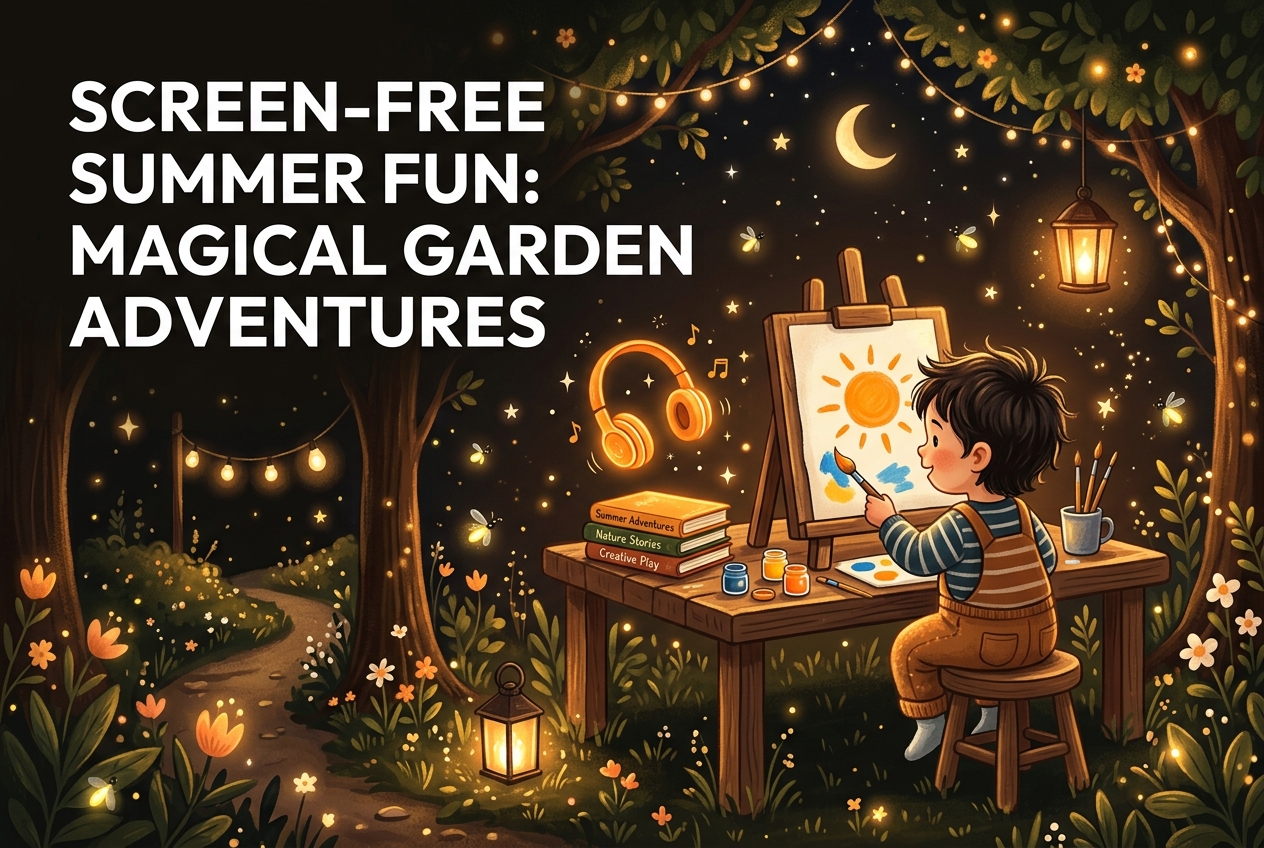
  • Summer Screen Time: 7 Creative Screen-Free Alternatives to Keep Your Kids Engaged

    Summer Screen Time: 7 Creative Screen-Free Alternatives to Keep Your Kids Engaged

    By Dr. Amel Slim, Child Psychologist • Updated on August 4, 2026

    Key Takeaways

    • Understand the Summer Surge: Recognize why screen time increases during holidays and how it impacts your child’s sleep and cognitive development.
    • Implement Creative Alternatives: Discover 7 engaging, screen-free activities, including building forts, outdoor scavenger hunts, and listening to personalized audio stories.
    • Establish Healthy Boundaries: Learn practical strategies for setting realistic screen limits without causing family friction, promoting a balanced digital detox.

    Why Screen Time Skyrockets During Summer Vacation

    During summer, children naturally spend more time on screens because structured school days are replaced by long, unstructured hours. When parents are busy balancing work and home life, and kids face the inevitable boredom of summer vacation, tablets and TVs often become the default babysitters.

    The combination of extreme heat keeping kids indoors and the exhaustion of parenting during the holidays creates the perfect storm for excessive screen reliance. While it is completely understandable to rely on digital entertainment for a well-deserved break, it is crucial to recognize the impact this has on developing minds. Extended exposure to screens, especially fast-paced videos and games, can lead to cognitive overstimulation. Furthermore, the blue light emitted by these devices suppresses melatonin production, severely disrupting healthy sleep patterns and leading to mood swings and decreased attention spans.

    Understanding these underlying causes is the first step in helping your family transition towards a healthier, more balanced summer routine. If you’re noticing your child is struggling to wind down at night, establishing a calming evening routine is essential. For more insights on this, explore our guide on The Power of Bedtime Stories to see how a screen-free evening can transform your child’s sleep.

    7 Creative Screen-Free Alternatives for Kids

    To break the digital habit, you need engaging alternatives that capture your child’s imagination. Here are seven creative, screen-free activities to keep your kids entertained and mentally stimulated all summer long.

    1. Dive into Personalized Audio Stories with Ahkili

    Audio stories are a powerful tool for a digital detox. They provide the narrative engagement of a cartoon without the visual overstimulation of a screen. With the Ahkili app, you can generate personalized audio stories where your child is the hero of their own adventure. Listening to these tales boosts imagination, improves active listening skills, and provides a calming activity for quiet afternoons or long car rides. It’s the perfect way to keep them entertained while giving their eyes a break. To learn more about how we are revolutionizing storytelling, read about the Official Launch of Ahkili.

    2. Build the Ultimate Indoor or Outdoor Fort

    Transform your living room or backyard into a magical kingdom. Provide your kids with blankets, pillows, cardboard boxes, and chairs, and let their engineering skills take over. Fort building encourages spatial awareness, problem-solving, and independent imaginative play. Once the fort is complete, it becomes the perfect cozy spot to listen to their favorite Ahkili audio story!

    3. Organize a Nature Scavenger Hunt

    Turn a simple walk in the park or a day in the garden into an exciting adventure. Create a simple checklist of items for them to find: a smooth rock, a yellow flower, three different types of leaves, or a feather. This activity promotes physical exercise, observational skills, and a deep appreciation for the natural world, keeping them engaged for hours.

    4. Set Up a DIY Art and Craft Station

    Designate a corner of your home as a creative zone. Stock it with washable paints, clay, recycled materials, glue, and safety scissors. Let them create without instructions. Unstructured art time allows children to express their emotions, develop fine motor skills, and experience the joy of tactile creation away from digital interfaces.

    5. Host a Family Cooking or Baking Session

    Bring the kids into the kitchen and make them your sous-chefs. Whether it’s baking cookies, making homemade popsicles, or assembling mini-pizzas, cooking teaches valuable life skills. It involves measuring (basic math), following instructions, and patience. Plus, the rewarding result is a delicious treat they made themselves.

    6. Create a Backyard Obstacle Course

    Use household items like hula hoops, jump ropes, buckets, and cushions to set up a fun physical challenge. Time them as they navigate the course or let them race against siblings. Physical activity is crucial for burning off summer energy and improving coordination, making it a fantastic alternative to sitting on the couch.

    7. Start a Summer Reading Challenge

    Create a cozy reading nook and set a goal for the summer. Whether they read independently or you read to them, books transport children to new worlds. You can make it interactive by having them draw their favorite scene from the book or act out the characters.

    Comparing Daily Routines: Screens vs. Creative Play

    Seeing the difference a screen-free schedule makes can be eye-opening. Here is a comparison of how different approaches shape a child’s summer day.

    Time of Day A Typical Day With Screens A Typical Day With Creative Alternatives
    Morning Wakes up and immediately asks for the tablet. Sluggish start. Helps make breakfast, engages in a nature scavenger hunt in the yard.
    Midday Hours of continuous video streaming. Irritable when interrupted. Builds an indoor fort; engages in independent imaginative play.
    Afternoon Plays repetitive video games. High energy but low focus. Explores the DIY art station or completes a backyard obstacle course.
    Evening Watches TV until bedtime. Struggles to fall asleep due to blue light. Listens to a personalized Ahkili audio story. Falls asleep peacefully.

    How to Set Healthy Screen Limits Without Conflict

    Setting boundaries around screen time requires consistency and clear communication. Begin by establishing “screen-free zones” such as the dining table and bedrooms, ensuring that screens do not interfere with family connection or sleep.

    Create a visual schedule so your child knows exactly when screen time is permitted and when it’s time for other activities. Instead of abruptly snatching the device away, give them a 10-minute warning before their time is up, which helps them transition smoothly. Most importantly, model good behavior; if you are constantly on your phone, your child will mirror that habit. By replacing screen time with highly engaging alternatives like personalized audio adventures, the transition becomes a positive upgrade rather than a punishment.

    Frequently Asked Questions (FAQ)

    1. How much screen time is appropriate for my child during the summer?

    For children ages 2-5, experts recommend limiting non-educational screen time to one hour per weekday. For older children, 2 hours is a sensible limit, ensuring it doesn’t interfere with physical activity, sleep, and family time.

    2. My kids get extremely angry when I take the tablet away. What should I do?

    This is a common reaction to dopamine withdrawal. Try using a physical timer so the “timer” is the bad guy, not you. Give a 5-minute warning, and transition them immediately into an engaging activity, like an outdoor game or listening to an audio story.

    3. Are all screens bad for my child’s brain?

    Not all screen time is equal. Interactive, educational content (like learning a language or video calling family) is better than passive consumption (like endlessly scrolling short videos). However, all screens emit blue light, so moderation is key.

    4. How can personalized audio stories help with digital detox?

    Audio stories remove the visual overstimulation of screens while still providing an engaging narrative. They satisfy a child’s desire for entertainment, stimulate their imagination, and help them wind down, making them an excellent transition tool.

    5. How do I entertain my kids when I have to work from home during the summer?

    Set up safe, independent play stations before you start working. Activities like building blocks, art supplies, or a playlist of Ahkili audio stories can keep them safely engaged while you focus on your tasks.

    Discover the Magic of Screen-Free Entertainment

    Ready to transform your child’s summer vacation? Give their eyes a break and their imagination a boost with personalized, immersive audio adventures.

    Download the Ahkili app today and start your first story!

    Download Ahkili on the App Store
    Get Ahkili on Google Play


    About the Author
    Dr. Amel Slim is a certified Child Psychologist specializing in cognitive development and digital well-being in children. With over 15 years of experience, she helps families navigate the challenges of modern parenting, advocating for balanced routines and creative, screen-free engagement. Her expertise ensures that the Ahkili platform is both highly entertaining and developmentally beneficial for young minds.

  • The Power of Bedtime Stories: How Custom Tales Calm Children’s Minds

    The Power of Bedtime Stories: How Custom Tales Calm Children’s Minds

    Key Takeaways :
    Soft identification : When the main character shares the child’s name and goes through their challenges, it helps them express their fears.
    Cognitive benefits : Audio listening stimulates active imagination and concentration.
    A screen-free routine : Replacing evening screens with quality audio tales promotes deep and natural sleep.

    The transition to sleep is one of the most delicate moments of the day for a child. Nighttime often represents separation from parents, the darkness of the bedroom, and the unknown of sleep.

    This transition frequently generates what psychologists call nocturnal separation anxiety. To calm this anxiety, offering screens is often counterproductive because blue light blocks the natural secretion of melatonin. This is where the audio alternative makes perfect sense.


    Table of Contents

    1. Bedtime anxiety in children aged 2 to 12
    2. Why personalization changes everything ?
    3. How Ahkili’s custom audio helps your routine
    4. Frequently Asked Questions (FAQ)

    1. Bedtime anxiety in children aged 2 to 12

    The bedtime ritual should not be a source of tension. To help the child release the pressure accumulated during the day, listening to a calm story is an excellent solution. Tales make it possible to soothe the heart rate and focus the mind on a reassuring narrative.


    2. Why personalization changes everything ?

    The metaphorical tale is a powerful support tool. But when the tale is personalized, its psychological impact is decupled.

    By inserting familiar elements (the child’s first name, their stuffed animal, or a challenge they are going through such as fear of the dark), the child projects their own feelings onto the main character. They experience the resolution of the problem vicariously, which releases their inner tensions in a healthy way.

    Evening ritual approach Child’s anxiety level Cognitive stimulation Impact on sleep
    Cartoons / Screens ❌ High (hyper-excitation) ❌ Passive Disturbed sleep
    Ahkili personalized tales Low (soothing) Active (creativity) Deep sleep

    3. How Ahkili’s custom audio helps your routine

    The Ahkili mobile app was designed to accompany parents by offering customizable stories adapted to each profile:

    1. Enter the child’s name, age, and favorite themes.
    2. Choose the current challenge or learning target (sharing toys, starting school, etc.).
    3. Our application generates a magical story carried by a warm and soothing voice, ideal for calm listening in the dark.

    Download on the App Store
    Get it on Google Play

    Frequently Asked Questions (FAQ)

    When is the best time to start listening to an Ahkili story?

    We recommend starting the audio once the child is comfortably settled under the blanket, with the lights dimmed.

    Is the app suitable for a 3-year-old child?

    Yes, Ahkili automatically adapts the vocabulary, story duration, and narration pace according to the child’s age.

    How many child profiles can I create?

    You can create up to 3 different child profiles within the same subscription.

    Are the voices used robotic?

    No, Ahkili uses high-end synthesized voices configured specifically for the storytelling tone, ensuring a warm, natural, and fluid narration.

    What is the average duration of a story?

    The duration typically varies between 5 and 10 minutes, which corresponds to the optimal concentration time of a child at bedtime.

FRAREN