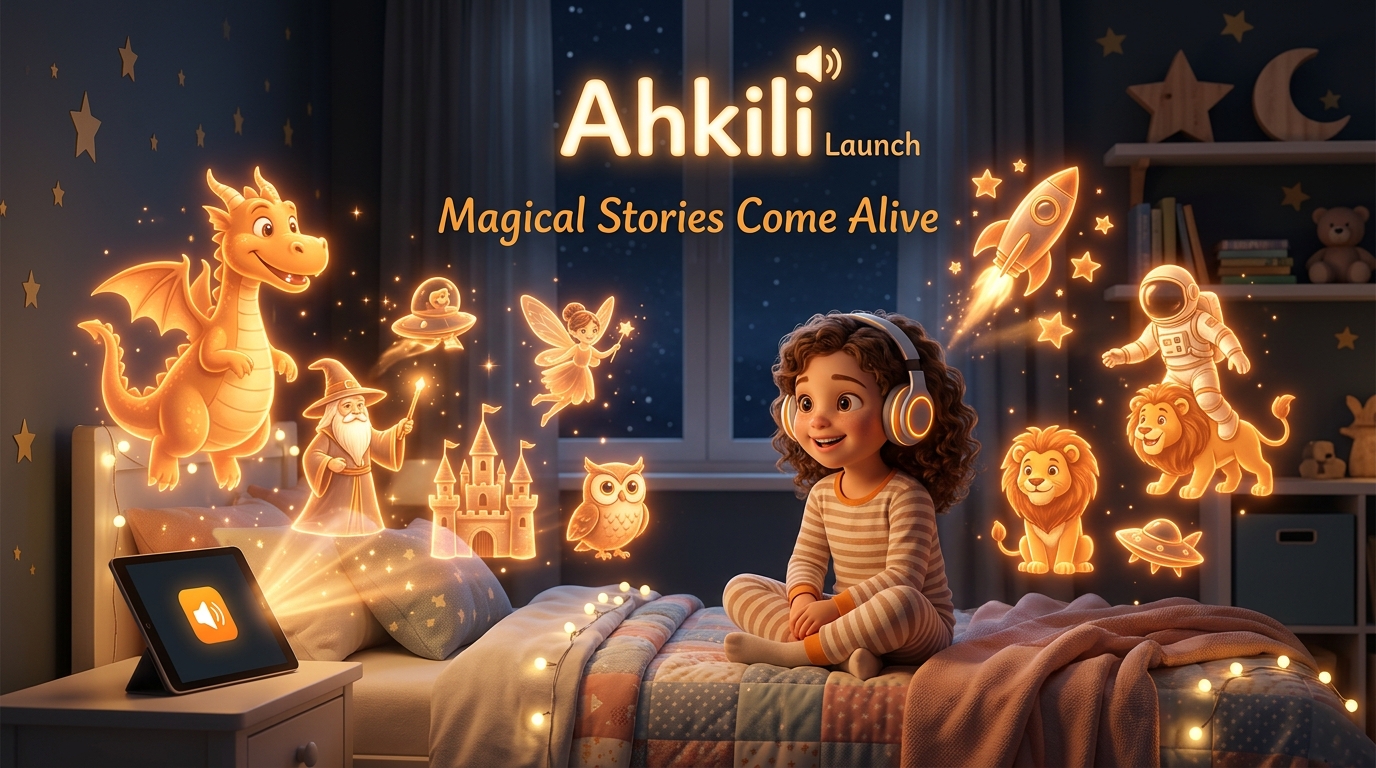
Tag: Bedtime Stories

  • How to Build a Tear-Free Homework Routine and Foster Your Child’s Learning Autonomy with Metaphorical Audio Stories

    How to Build a Tear-Free Homework Routine and Foster Your Child’s Learning Autonomy with Metaphorical Audio Stories

    By Dr. Amel Slim, Child Psychologist • Updated on October 06, 2026

    Key Takeaways:
    – Homework refusal is not laziness: It is executive function fatigue and emotional overwhelm in the prefrontal cortex following 6 to 8 hours of intense restraint at school.
    – Narrative metaphors as self-regulation tools: Listening to audio stories where an empathetic hero breaks challenges into small quests helps children adopt a growth mindset without parental friction.
    – Empowering autonomy with Ahkili: Replacing stressful screen decompression with personalized audio stories transforms schoolwork from a forced chore into intrinsic curiosity and self-driven learning.

    A few weeks into the school year, the initial excitement has worn off, and the reality of daily school expectations sets in. Every afternoon in millions of households, the scene plays out identically: an open backpack on the dining table, heavy sighs, tears rolling over a math worksheet, and desperate cries of “I hate homework! I don’t want to do this!”. For parents, what should be a peaceful evening transition quickly spirals into a battleground filled with guilt, exasperation, and raised voices.

    Building a tear-free homework routine is not about enforcing strict authoritarian discipline; it is about emotional co-regulation and cognitive safety. Developmental psychology and modern neuroscience show that when we replace power struggles with structured decompression and inspiring metaphorical tales, children naturally rediscover their innate curiosity and confidence. Let’s explore how to design a peaceful homework ritual and unlock your child’s natural learning autonomy.


    1. Why Does Homework Time Turn into a Battleground? The Brain Science Behind the Tears

    After-school meltdowns and homework resistance stem from the depletion of the child’s executive functions after a long day of intense cognitive and emotional self-control.

    To respond effectively rather than react emotionally, parents must understand what is happening inside their child’s developing brain between 4:00 PM and 7:00 PM.

    Prefrontal cortex depletion and the “after-school restraint collapse”

    Throughout the school day, the prefrontal cortex works in overdrive: inhibiting impulses, sitting still, following multi-step instructions, and navigating peer dynamics.

    • The restraint collapse phenomenon: Once children return home to their safest attachment figures, the emotional dam breaks. The child’s nervous system decompresses through stubborn refusal, tears, or explosive irritability.
    • The trap of digital “decompression”: Many parents hand over a tablet or switch on the television believing it provides necessary rest. In reality, hyper-stimulating fast-paced visual algorithms keep the dopamine loop running on high gear, making the transition to paper-and-pencil tasks nearly impossible, as examined in our guide on creating a calming screen-free routine after school.
    • The cortisol loop of yelling: When parents shout or threaten (“If you don’t finish this right now, no dessert!”), the amygdala triggers a fight-or-flight response. The resulting flood of cortisol effectively shuts down working memory and logical problem-solving centers.

    The danger of parental over-helping and learned helplessness

    Hovering over every exercise often undermines the exact autonomy parents hope to cultivate:

    • Learned helplessness: Constantly correcting mistakes or feeding answers communicates the unspoken message: “You cannot handle this on your own.”
    • Fear of making mistakes: In rigid educational settings, errors are frequently perceived as failures rather than valuable data points. When an exercise feels challenging, children would rather refuse to try than risk disappointing their parents.
    • The fragile self-concept: Children who struggle with self-worth immediately equate a tough question with being “dumb”. This makes nurturing your child’s self-confidence foundational for fostering resilience when faced with academic hurdles.

    2. Metaphorical Audio Stories: Unlocking Intrinsic Motivation and Growth Mindset

    Metaphorical audio stories bypass defensive resistance by allowing children to explore perseverance and problem-solving through the adventures of an inspiring fictional alter ego.

    Dr. Carol Dweck’s groundbreaking research on the Growth Mindset demonstrated that children only thrive academically when they understand that intellectual capacity expands through effort, curiosity, and trial-and-error.

    Harnessing mirror neurons through narrative role-modeling

    When children immerse themselves in an engaging audio story, their mirror neurons simulate the emotional triumph of the protagonist:

    • Indirect emotional learning: Hearing about a young wizard apprentice who had to practice an incantation seven times or a clever raccoon who broke a giant puzzle into tiny steps normalizes the struggle. The child adopts the character’s strategy without feeling lectured.
    • Decoupling shame from errors: Within a metaphorical world, mistakes are simply clues that advance the quest. This reframing removes perfectionist paralysis.
    • Strengthening sustained attention: Active audio listening trains mental visualization and auditory processing—skills that directly support academic tasks, which are vital for boosting your child’s focus and working memory.

    The 3-Step Homework Routine: Decompress, Sprint, Celebrate

    Pediatric psychologists recommend a predictable, rhythmic workflow to replace unpredictable power struggles:

    1. Step 1: The Sensory Reset (20-30 minutes): Wholesome snack, hydration, physical stretching, or a calming 5-minute audio tale. Zero screens and zero talk of school tasks.
    2. Step 2: The Focused Sprint (15-25 minutes): Use a visual timer or hourglass. Let the child decide which assignment to tackle first. The parent remains available nearby for encouragement, but only intervenes when asked a specific question.
    3. Step 3: The Celebration of Effort: Pack the bag together, acknowledge persistence (“I loved how you kept trying that challenging puzzle until you solved it!”), and transition to family connection.

    3. How the Ahkili App Nurtures Your Child’s Independence

    The Ahkili app creates customized audio adventures featuring your child’s name, interests, and current challenges, turning perseverance into an empowering daily ritual.

    With Ahkili’s child-safe narrative intelligence, parents have a gentle, screen-free companion to support daily learning milestones.

    Tailored stories designed for everyday childhood challenges

    Through Ahkili’s intuitive profile settings, parents can tailor stories directly to the week’s emotional landscape:

    • Customized learning quests: You can generate a story where your child is a galactic navigator decoding coordinates (math practice) or an ancient scroll explorer deciphering mysterious runes (spelling and reading).
    • Consolidating mindset during bedtime: Listening to Ahkili before sleep allows the subconscious brain to process perseverance themes during deep restorative sleep cycles, harnessing the power of bedtime stories to soothe the mind.
    • A 100% audio sanctuary: Ahkili delivers rich sound design and expressive voices with zero screen glare, protecting melatonin production and next-day mental alertness.

    Comparison Table: Approaches to Daily Homework Routines

    Evaluation Criteria Threats & Pressure (“Do it or else!”) Over-Assistance (“Let me just do it for you”) Narrative Routine & Ahkili Audio
    Neurological Impact Cortisol spike, shutdown of working memory Cognitive passivity, adult dependency Healthy dopamine, calm emotional regulation
    Autonomy Development None (compliance through fear or open rebellion) Weak (reinforces self-doubt and helplessness) High (child takes ownership and pride in effort)
    Family Atmosphere Daily screaming matches, tears, and exhaustion Quiet tension and parental frustration Peaceful cooperation, shared joy, and trust
    Long-term Retention Knowledge quickly forgotten once threats stop Inability to perform independently on exams Deep internalization of curiosity and grit

    Frequently Asked Questions (FAQ)

    How long should daily homework realistically take in elementary school?

    For kindergarten through 2nd grade, 10 to 20 minutes of focused effort is plenty. For 3rd through 5th grade, 25 to 35 minutes is the recommended ceiling. Beyond that limit, cognitive exhaustion takes over, and additional time produces diminishing returns.

    What should I do when my child cries and says “I’m stupid, I can’t do this”?

    Never dismiss their feelings with “Don’t be silly, it’s easy.” Validate their overwhelm: “It feels like a huge mountain right now, and you’ve worked hard all day.” Take a two-minute breathing break, drink some water, and help them break the problem into tiny, manageable steps.

    Should I reward my child with screen time or treats for finishing homework?

    Extrinsic rewards often erode intrinsic curiosity over time: the child learns to associate the work with suffering that requires a bribe. Instead, use natural relational rewards—a hug, a shared board game, or listening to an exciting personalized Ahkili story together.

    Why is watching YouTube or playing video games before homework harmful?

    Video games and fast-paced videos flood the brain with instant dopamine. Transitioning from that artificial sensory high to black-and-white homework causes immediate neurochemical frustration, leading to resistance and tantrums.

    How does Ahkili specifically help children who resist academic tasks?

    Ahkili lets parents weave their child’s real-life academic challenges into magical tales where the child is the hero. Experiencing how their alter ego overcomes self-doubt and solves mysteries inspires real-world pride and a fearless attitude toward homework.


    This article was written in collaboration with Dr. Amel Slim, child psychologist specializing in cognitive and language development. Educational advisor for Ahkili.


    Download on the App Store
    Get it on Google Play
  • How to Help Your Shy Child Build Confidence and Thrive at School with Metaphorical Audio Stories

    How to Help Your Shy Child Build Confidence and Thrive at School with Metaphorical Audio Stories

    By Dr. Amel Slim, Child Psychologist • Updated September 29, 2026

    Key Takeaways :
    – Shyness is a protective trait, not a flaw : It stems from behavioral inhibition where the brain observes carefully before acting, requiring unconditional emotional safety rather than forceful pressure.
    – The neurological power of mirror neurons : When listening to a metaphorical tale where a relatable hero navigates social hesitation, children experience self-assertion vicariously without fear of real-world judgment.
    – Personalized audio bedtime conditioning : Custom stories on Ahkili allow kids to internalize positive problem-solving narratives right before sleep, which naturally boosts their playground confidence the next day.

    A few weeks into the school year, daily routines are settled, yet for many children, the playground and the classroom can feel like overwhelming social stages. Does your child hesitate before answering questions, stay on the sidelines during group games, or look down when addressed by a teacher? As a caring parent, it is completely normal to worry about how to support your child’s social integration without pushing them too hard or slapping on an unhelpful “shy” label.

    In child development psychology, shyness is recognized not as a defect, but as an adaptive sensitivity. When nurtured with empathy, this cautiousness transforms into deep emotional intelligence and enduring resilience. Let us explore how modern neuroscience and metaphorical audio storytelling provide a gentle, effective bridge to help your shy child build rock-solid confidence.


    1. Demystifying Childhood Shyness: Neuroscience and Emotional Safety

    Shyness originates from heightened amygdala reactivity to unfamiliar social settings, fueled by the natural fear of evaluation or perceived vulnerability.

    When a child enters a bustling classroom or approaches a circle of unfamiliar peers, the brain’s limbic system perceives social novelty as a situation requiring vigilance. Understanding this neural process helps parents respond with compassion rather than frustration.

    Behavioral inhibition and the role of the amygdala

    For cautious children, the amygdala triggers an automatic pause-and-observe reflex:

    • Observation precedes participation : Shy children need to assess social cues, facial expressions, and group dynamics before feeling safe enough to participate. This careful observation is an analytical strength, not indifference.
    • The hazard of forceful commands : Telling a child “Don’t be shy, go say hello!” or “Go play with the others!” triggers a fight-or-flight stress reaction, heightening their physiological distress.
    • Cognitive exhaustion from sensory overload : Managing social vigilance while keeping up with classroom rules drains an enormous amount of mental energy, as highlighted in our guide on building a calming screen-free routine after school.

    Why labeling locks children in place

    Repeatedly referring to your little one as “the shy one” creates a self-fulfilling prophecy:

    • The Pygmalion effect : When children hear themselves described as timid, they integrate that perception into their core self-image and conform to it in social environments.
    • Praising effort and strategy : Shifting praise from fixed traits to observed behaviors (“I loved how you observed the game before joining in; that was smart”) builds proactive self-worth.
    • The secure base of family attachment : Just as we explored when discussing how to soothe childhood anxiety through bedtime metaphors, an emotionally secure home environment is the true foundation that empowers kids to explore the outer world bravely.

    2. Metaphorical Stories: A Safe Emotional Playground for Growing Minds

    Metaphorical storytelling allows children to project social doubts onto fictional characters and experience courageous choices safely without real-world vulnerability.

    Narrative psychology has long demonstrated that storytelling bypasses conscious defensive barriers. Rather than lecturing children on how to behave, a compelling story speaks directly to their emotional brain through relatable imagery and symbolic wisdom.

    Mirror neurons and vicarious courage

    When your child listens to the adventures of a protagonist facing similar hurdles, their brain mirrors the journey:

    • Experiencing triumph without risk : Listening to a little hedgehog who learns when to gently open his quills or a young bear discovering the magic words to join a sandbox castle activates mirror neurons, simulating social success in the brain.
    • Dissolving feelings of shame : Metaphor removes personal blame. The child does not feel exposed; instead, they empathize with the hero and absorb practical conflict-resolution strategies.
    • Enhancing emotional consolidation : Engaging narratives spark positive neuroplasticity, working synergistically with methods designed for boosting children’s focus and cognitive memory.

    Opening gentle conversations after listening

    Audio stories naturally spark spontaneous, low-pressure conversations between parents and children:

    • Third-person reflection : Asking “Why do you think the little falcon was nervous about soaring with the flock?” lets children discuss their own classroom fears without feeling cornered.
    • Collaborative problem solving : Encouraging your child to invent the hero’s next move strengthens Albert Bandura’s concept of self-efficacy—the belief in one’s own capability to succeed.

    3. How Ahkili Customizes the Path to Confidence

    The Ahkili mobile application generates bespoke audio tales featuring your child’s name, favorite settings, and real-life themes to nurture self-esteem on a deeply personal level.

    By combining child-friendly narrative structures with state-of-the-art voice generation, Ahkili transforms bedtime into a sanctuary of emotional resilience.

    Tailored storytelling for social self-worth

    Parents can easily guide Ahkili’s storytelling engine to focus on social empowerment:

    • The child as the gentle hero : Hearing their own name woven into an exciting journey where their specific virtues—such as empathy, quiet curiosity, or creativity—save the day validates their individuality.
    • Micro-steps of courage : Scenarios celebrate achievable daily wins: raising a hand to share an idea, welcoming a newcomer, or finding their own authentic voice in a group.
    • Restful evening integration : Listening in the quiet comfort of their bedroom lets positive affirmations integrate into long-term emotional memory during slow-wave sleep, harnessing the calming power of personalized bedtime stories.

    Comparison: Approaches to Childhood Shyness

    Evaluation Metric Forceful Pushing (“Just speak up!”) Overprotective Avoidance Personalized Metaphorical Stories (Ahkili)
    Impact on Social Anxiety Increases acute stress and social dread Solidifies long-term avoidance patterns Gently lowers anxiety through safe projection
    Sense of Self-Efficacy Leads to feelings of shame and inadequacy Fosters learned helplessness Steadily builds genuine internal confidence
    Child Motivation Resentful compliance or withdrawal Relief through flight and missed growth Eager intrinsic desire to try new behaviors
    Emotional Retention Negligible (defensive shutdown) Fleeting and superficial Deep, lasting memory via storytelling

    Frequently Asked Questions (FAQ)

    When does normal childhood shyness indicate a need for professional guidance?

    Gentle hesitation is healthy and normal if the child has at least one friend and engages in school activities over time. If shyness manifests as selective mutism, persistent physical ailments before school, or extreme social isolation lasting beyond several months, consulting a pediatric psychologist is recommended.

    Why is forcing a shy child to greet unfamiliar adults counterproductive?

    Demanding an instant greeting puts an inhibited nervous system on high alert and associates social interaction with embarrassment. Modeling friendly, polite greetings yourself while allowing your child to observe comfortably provides far superior long-term results.

    At what age do metaphorical bedtime stories begin to influence confidence?

    Children begin understanding symbolic metaphors around age 3. Between ages 4 and 8, their cognitive receptivity is at its peak; they readily translate the hero’s triumphs into actionable confidence for their own daily lives.

    How often should my child listen to a story to see emotional changes?

    Children naturally enjoy re-listening to comforting stories. Playing the same customized story over 7 to 10 consecutive evenings reinforces neural pathways associated with courage and security.

    How should I introduce an Ahkili story without making my child feel self-conscious?

    Never frame it as corrective (“I made this so you talk more at school”). Present it as a celebration: “Tonight, we have a magical adventure where a brave explorer with your exact super-talents discovers how to solve a wonderful mystery!”.


    This article was written in collaboration with Dr. Amel Slim, child psychologist specializing in pediatric cognitive and language development. Educational advisor for Ahkili.

    Download on the App Store
    Get it on Google Play
  • Official Launch of Ahkili: How Personalized Audio Stories Are Transforming Bedtime for Kids

    Official Launch of Ahkili: How Personalized Audio Stories Are Transforming Bedtime for Kids

    Navigating screen time limits and establishing peaceful bedtime routines are top priorities for parents everywhere. Finding an engaging, healthy, and screen-free activity at the end of a busy day has long been a daily challenge. To address this exact need, we are thrilled to announce the official launch of the Ahkili mobile application on iOS and Android.

    Ahkili is a storytelling app that generates personalized audio stories for children, powered by safe and creative AI. By blending your child’s name, interests, daily challenges (such as fear of the dark, starting school, or sharing toys), and core family values, Ahkili creates unique audio adventures narrated by warm, natural human-like voices in seconds.


    Key Takeaways:
    – The Child is the Hero: Magical personalization incorporating your child’s name, hobbies, friends, and life lessons.
    – 100% Screen-Free Alternative: Stimulates auditory imagination while preserving eyesight and deep sleep quality.
    – Pedagogical & Emotional Support: Helps children process real-world challenges through gentle story metaphors.


    Why Personalized Audio Stories Transform Bedtime Routines

    Bedtime shouldn’t be a battleground over tablets or television screens. Child psychology studies consistently show that listening to calming audio stories helps children transition into a relaxed state, preparing their minds and bodies for restful sleep.

    When a child hears their own name and life experiences woven into a story, experts call this positive reflexive identification. Children don’t just passively listen—they mentally step into the hero’s shoes, gaining confidence and emotional resilience as story challenges resolve happily.

    To learn more about how bedtime stories foster emotional calm, read our guide on power of bedtime stories.


    Core Features of the Ahkili App

    Ahkili was designed by parents, for parents, prioritizing simplicity, complete content safety, and unlimited creativity.

    1. Tailored Personalization & Educational Themes

    Every child is unique. Ahkili lets you create up to 3 child profiles per account. You can select:

    • Favorite Story Worlds: Space exploration, enchanted forests, friendly animals, magical fairy tales, or everyday life adventures.
    • Sidekicks & Buddies: Include the names of favorite stuffed animals, siblings, or best friends.
    • Moral Values: Instill empathy, honesty, environmental stewardship, kindness, and bravery.

    2. Gentle Guidance for Daily Challenges (Custom Prompts)

    Is your toddler hesitant about brushing their teeth or nervous about their first day at preschool? Ahkili’s AI engine lets you type a quick prompt describing the daily hurdle. The app automatically weaves a charming metaphor that encourages positive habits without lecturing.

    3. Studio-Quality Narration Powered by PlayHT

    All stories are brought to life by studio-quality synthetic voices. Free of robotic monotony, these warm and expressive voices captivate young listeners in English, French, and classical Arabic.


    Comparison: Screen Time vs. Ahkili Audio Routine

    Feature Screen & Video Time (Tablets / TV) Ahkili Audio Stories
    Impact on Sleep Blue light inhibits melatonin production Zero blue light, promotes restorative sleep
    Cognitive Growth Passive visual consumption and overstimulation Active imagination and vocabulary expansion
    Emotional Wellbeing Increased agitation and screen dependency Deep relaxation, self-reflection, and comfort
    Personalization One-size-fits-all generic content Custom-crafted tales tailored to your child
    Content Safety Risk of random ads or unwanted content 100% safe, parent-controlled environment

    What Parents Are Saying

    “Ahkili has completely transformed our bedtime routine. My 6-year-old son falls asleep with a smile, listening to stories where he and his dog explore the galaxy together.”
    — David Miller, Parent & Elementary School Educator.


    Frequently Asked Questions (FAQ)

    What age group is Ahkili suitable for?

    Ahkili is designed for children aged 2 to 12 years. Story complexity and vocabulary automatically adapt to your child’s age group.

    Are there any ads in the app?

    No. Ahkili is 100% ad-free to ensure a peaceful, safe, and distraction-free experience for your children.

    Is Ahkili available in multiple languages?

    Yes! Ahkili supports high-quality audio storytelling in English, French, and Classical Arabic (Fusha). You can easily select your preferred language for each story.

    Can I create stories for more than one child?

    Yes. Each parent account allows you to create up to 3 distinct child profiles, so every child has their own personalized library of adventures.

    Where can I download the app?

    Ahkili is available for free download on both the Apple App Store for iOS and Google Play Store for Android devices.


    Download Ahkili Today

    Join thousands of parents who are bringing magic back to bedtime with screen-free, personalized audio storytelling.


    About the Author: This article was reviewed by Dr. Amel Slim, Child Psychologist and Educational Consultant specializing in early childhood cognitive development and healthy digital habits.

    Download on the App Store
    Get it on Google Play
  • The Power of Bedtime Stories: How Custom Tales Calm Children’s Minds

    The Power of Bedtime Stories: How Custom Tales Calm Children’s Minds

    Key Takeaways :
    – Soft identification : When the main character shares the child’s name and goes through their challenges, it helps them express their fears.
    – Cognitive benefits : Audio listening stimulates active imagination and concentration.
    – A screen-free routine : Replacing evening screens with quality audio tales promotes deep and natural sleep.

    The transition to sleep is one of the most delicate moments of the day for a child. Nighttime often represents separation from parents, the darkness of the bedroom, and the unknown of sleep.

    This transition frequently generates what psychologists call nocturnal separation anxiety. To calm this anxiety, offering screens is often counterproductive because blue light blocks the natural secretion of melatonin. This is where the audio alternative makes perfect sense.


    Table of Contents

    1. Bedtime anxiety in children aged 2 to 12
    2. Why personalization changes everything ?
    3. How Ahkili’s custom audio helps your routine
    4. Frequently Asked Questions (FAQ)

    1. Bedtime anxiety in children aged 2 to 12

    The bedtime ritual should not be a source of tension. To help the child release the pressure accumulated during the day, listening to a calm story is an excellent solution. Tales make it possible to soothe the heart rate and focus the mind on a reassuring narrative.


    2. Why personalization changes everything ?

    The metaphorical tale is a powerful support tool. But when the tale is personalized, its psychological impact is decupled.

    By inserting familiar elements (the child’s first name, their stuffed animal, or a challenge they are going through such as fear of the dark), the child projects their own feelings onto the main character. They experience the resolution of the problem vicariously, which releases their inner tensions in a healthy way.

    Evening ritual approach Child’s anxiety level Cognitive stimulation Impact on sleep
    Cartoons / Screens ❌ High (hyper-excitation) ❌ Passive Disturbed sleep
    Ahkili personalized tales Low (soothing) Active (creativity) Deep sleep

    3. How Ahkili’s custom audio helps your routine

    The Ahkili mobile app was designed to accompany parents by offering customizable stories adapted to each profile:

    1. Enter the child’s name, age, and favorite themes.
    2. Choose the current challenge or learning target (sharing toys, starting school, etc.).
    3. Our application generates a magical story carried by a warm and soothing voice, ideal for calm listening in the dark.

    Download on the App Store
    Get it on Google Play

    Frequently Asked Questions (FAQ)

    When is the best time to start listening to an Ahkili story?

    We recommend starting the audio once the child is comfortably settled under the blanket, with the lights dimmed.

    Is the app suitable for a 3-year-old child?

    Yes, Ahkili automatically adapts the vocabulary, story duration, and narration pace according to the child’s age.

    How many child profiles can I create?

    You can create up to 3 different child profiles within the same subscription.

    Are the voices used robotic?

    No, Ahkili uses high-end synthesized voices configured specifically for the storytelling tone, ensuring a warm, natural, and fluid narration.

    What is the average duration of a story?

    The duration typically varies between 5 and 10 minutes, which corresponds to the optimal concentration time of a child at bedtime.

FRAREN