By Dr. Amel Slim, Child Psychologist • Updated October 13, 2026
Key Takeaways:
– A normal developmental milestone : Between ages 3 and 8, an explosion of imagination causes children to perceive nighttime shadows as threats, activating the brain’s amygdala.
– The soothing power of metaphorical stories : By introducing comforting archetypes (such as a guardian star or a brave gentle guide), audio stories reframe the dark without invalidating real feelings.
– Screen-free audio immersion preserves melatonin : Listening in low light gently slows heart rates and encourages natural, uninterrupted circadian sleep rhythms.
As autumn deepens and night falls earlier, many family evenings dissolve into bedtime battles: closet doors inspected multiple times, desperate requests to leave the hallway lights blazing, and tears whenever bedroom doors click shut. For young children, the fear of the dark is neither manipulation nor weakness; it is a vivid byproduct of cognitive development. By replacing stimulating screens with personalized audio stories, parents can transform evening darkness from a source of terror into a welcoming cocoon of wonder and restorative rest.
Why Do Children Develop a Fear of the Dark?
Fear of the dark emerges between ages 3 and 7 when developing imaginations outpace logical reasoning, turning ordinary sensory deficits into imagined threats.
The Amygdala, Sensory Deprivation, and Magical Thinking
When bedroom lights go out, visual deprivation prompts the brain’s alarm center—the amygdala—to scan for danger in ambiguous shapes and quiet household sounds.
In early childhood, the boundary between reality and fantasy remains delightfully fluid, a stage psychologists term “magical thinking.” A coat rack becomes an unwelcome giant, and the rustle of curtains turns into approaching footsteps. According to guidelines from the American Academy of Pediatrics (AAP) and pediatric neurology research, dismissing these fears by insisting that “there is nothing in the dark” rarely works. To an anxious child, the physiological fear response is entirely real, requiring emotional validation rather than logical debates.
The Role of School Fatigue and Evening Screen Overstimulation
Accumulated fatigue from demanding school days depletes children’s emotional regulation reserves, leaving them fragile when bedtime arrives.
After spending hours focusing in structured classrooms, children arrive home with drained coping mechanisms. When parents attempt to soothe pre-bedtime restlessness with digital tablets or television, blue light suppresses essential melatonin synthesis. As we explored in our guide on after-school screen fatigue in children, screen overstimulation keeps the central nervous system locked in fight-or-flight mode, turning the quiet bedroom into an echo chamber for nighttime anxiety.
How Metaphorical Audio Stories Transform Nighttime Fears
Metaphorical audio storytelling empowers children to process nighttime apprehension safely by providing symbolic emotional mastery over darkness.
Narrative Metaphors as Emotional Armor
Metaphors allow children to explore and master vulnerable feelings at a safe emotional distance without feeling exposed or inadequate.
Classic developmental psychology demonstrates that fairy tales and allegorical stories speak directly to a child’s subconscious mind. When an audio tale features a little hedgehog who discovers that night is simply the blanket under which the forest sleeps, or a young stargazer befriending a playful crescent moon, the child internalizes safety. Darkness shifts from an unpredictable vacuum into a peaceful sanctuary.
This approach also proves remarkably effective in soothing nighttime separation anxiety in children, because a continuous gentle voice serves as an auditory transitional object while parents step away from the bedside.
Personalized Storytelling with the Ahkili App
Placing your child as the brave protagonist within a custom audio narrative builds lasting emotional resilience and nighttime confidence.
Through Ahkili, parents can craft tailor-made audio adventures featuring their child’s name, beloved comfort toys, and personal interests. Listening to a warm, expressive voice describe how the child embarks on a peaceful starry journey fosters self-efficacy. By building child confidence and emotional security, personalized audio stories eliminate bedtime resistance and make turning off the lights an adventure to look forward to.
4 Practical Steps for a Fear-Free Bedtime Routine
A predictable 20-to-30-minute evening ritual reduces nighttime panic awakenings and bedtime resistance by over 60%.
1. Emotional Decompression Before Entering the Bedroom
Spend five minutes sitting together in the living room reviewing the day. Ask gently: “Is there any shadow or worry you want to leave behind today?” Acknowledging fears without magnifying them releases emotional tension before setting foot in bed.
2. Gradual Light Dimming and Amber Nightlights
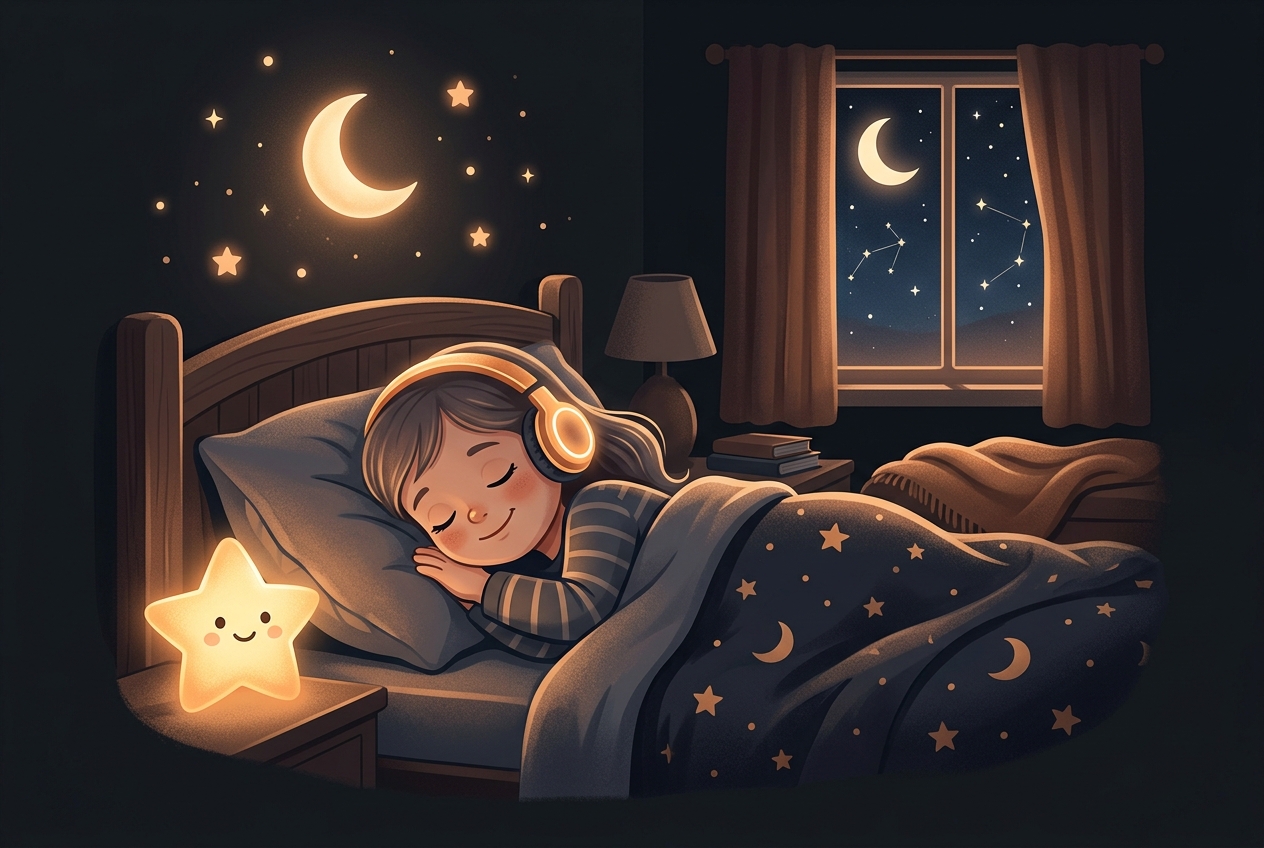
Begin dimming household lights 45 minutes before bedtime. In the child’s room, choose a low-intensity, warm amber nightlight (under 2700K) placed close to the floor to prevent intimidating shadows from stretching across walls.
3. Screen-Free Audio Immersion in Dim Light
Tuck your child in snugly and launch an Ahkili audio story. The soothing cadence captures auditory attention, preventing runaway thoughts from dwelling on ambient house noises. As detailed in our research on the calming power of bedtime storytelling, gentle audio narration triggers relaxing alpha brainwaves that pave the way toward rapid REM sleep.
4. A Reassuring Closing Anchor
Always conclude with the same comforting closing affirmation: “The stars are watching over your bedroom, and we are right in the next room. Sleep safely and soundly.”
Comparative Table: Strategies for Managing Nighttime Fears
The table below contrasts standard parenting responses to childhood fear of the dark:
| Evaluation Criteria | Conventional Response (Bright light & denial) | Screen-Based Distraction (Videos/Cartoons) | Ahkili Personalized Audio Stories |
|---|---|---|---|
| Melatonin Production | Delayed due to excessive ambient brightness | Severely disrupted by blue light emissions | Optimized by listening peacefully in low warm light |
| Emotional Processing | Fears are suppressed without resolution | Attention deflected temporarily; anxiety rebounds | Fears resolved symbolically through narrative agency |
| Child Autonomy | Heavy dependency on parental bedside vigil | Increasing addiction to screen stimulation to sleep | Strengthens internal sense of emotional security |
| Sleep Architecture | High frequency of night terrors and awakenings | Restless sleep with frequent micro-arousals | Deep, uninterrupted slow-wave restorative sleep |
| Imagination Health | Anxious rumination or passive fear | Overstimulated by frantic visual graphics | Gentle, creative, self-soothing mental imagery |
Frequently Asked Questions (FAQ)
At what age is fear of the dark most common?
Fear of the dark typically begins around age 2.5 to 3, as imagination rapidly blooms alongside the onset of vivid dreams. It peaks between ages 4 and 6, gradually fading around ages 8 to 10 as abstract reasoning and realistic risk assessment mature.
Should parents leave a bright hallway light on all night?
No, leaving bright overhead lights on disrupts the child’s circadian rhythm and impairs deep restorative sleep. Instead, use a dim amber nightlight positioned below bed height or a soft nightlight with an automatic 30-minute shutoff timer after the audio story finishes.
Why doesn’t telling children “monsters aren’t real” comfort them?
Young brains do not yet reliably separate vivid imagination from physical reality. Telling an alarmed child that monsters do not exist feels dismissive of their real physical fear. Instead, validate their feeling first and use comforting metaphorical narratives to help them conquer fears symbolically.
How does screen-free audio specifically calm nighttime anxiety?
Audio storytelling engages the auditory cortex while freeing the visual system, allowing children to close their eyes and relax tense muscles. When tales incorporate their own name and positive affirmations, anxious adrenaline gives way to soothing oxytocin.
What should parents do if a child wakes up terrified by a nightmare?
Stay calm, speak in a gentle low voice, and offer firm physical embrace without turning on harsh ceiling lights. Practice slow belly breathing together, remind them of their bedtime story’s magical protector, and stay until their breathing stabilizes before tucking them back in.
This article was developed in collaboration with Dr. Amel Slim, a child psychologist specializing in pediatric cognitive and language development, and pedagogical advisor to Ahkili.

