By Dr. Amel Slim, Child Psychologist • Updated October 20, 2026
Key Takeaways:
– Brain immaturity, not misbehavior : Under age 6 or 7, a child’s prefrontal cortex is still maturing; when frustration strikes, the amygdala triggers an intense physiological surge that the child cannot yet regulate through logic alone.
– The healing power of narrative metaphors : By identifying with a brave character who tames a playful inner dragon or cools an imaginary volcano, children acquire coping tools and emotional vocabulary without feeling blamed.
– Personalized screen-free audio as an evening reset : Listening to custom bedtime stories soothes overstimulated nervous systems, lowers evening cortisol, and helps prevent tomorrow’s tantrums.
Piercing shrieks, clenched fists, slamming doors, or public meltdowns on supermarket floors: every parent has experienced that sinking feeling of helplessness when a child spirals into a tempest of rage. All too often, society labels these episodes as defiance, manipulation, or “bad parenting.” Yet contemporary developmental neuroscience paints a very different picture: an emotional explosion is not a bid for dominance, but a temporary state of profound neurobiological disorganization. When words fail and punishments only worsen the storm, personalized audio storytelling emerges as a gentle, scientifically grounded bridge to peace. By making your child the hero of a tailored audio adventure where they learn to befriend their big feelings, you turn chaotic emotional outbursts into lifelong emotional intelligence.
Understanding Childhood Meltdowns: Why Do Kids Lose Control?
Tantrums and outbursts in early childhood stem from physiological immaturity in the prefrontal cortex, which is easily hijacked by adrenaline and cortisol surges from the brain’s alarm center, the amygdala.
The “Flipped Lid” and the Brain-in-the-Hand Model
To help parents understand childhood anger, renowned neurobiologist Dr. Daniel Siegel popularized the “brain in the hand” model. The lower brain (the brainstem and limbic amygdala, or “downstairs brain”) is fully functional from birth: it acts as a survival watchdog, scanning for danger, hunger, and frustration. In contrast, the upper brain (the prefrontal cortex, or “upstairs brain”), responsible for self-control, perspective-taking, and problem-solving, develops slowly throughout childhood and into early adulthood.
When a young child faces a boundary, a broken toy, or sudden sensory overload, their upstairs brain literally goes offline—a phenomenon Siegel describes as “flipping their lid.” The sympathetic nervous system floods their small body with stress chemicals. Children in the midst of a meltdown are not choosing to behave poorly; they are experiencing an involuntary neurobiological deluge that overwhelms their sensory and linguistic capacity.
After-School Restraint Collapse and Evening Fatigue
The 5:00 PM meltdown is frequently the result of “restraint collapse,” occurring when a child finally releases hours of pent-up emotional self-control upon returning home.
Throughout the school day, children expend immense mental energy sitting quietly, following instructions, navigating peer dynamics, and suppressing impulses. When they return home to their primary attachment figures, they finally feel safe enough to let their emotional defenses drop. Handing an exhausted, dysregulated child an interactive tablet or fast-paced cartoon may seem like a quick fix, but it typically backfires. As highlighted in our research on after-school screen fatigue and nervous exhaustion, excessive visual stimulation delays parasympathetic activation, leaving the child hypervigilant and primed for another explosive meltdown at dinnertime.
Why Punishing or Rationalizing During a Storm Always Fails
During an acute meltdown, a child’s linguistic brain is neurologically unreachable; harsh consequences or logical lectures only intensify their sense of panic and isolation.
The Pitfall of Power Struggles and Punitive Isolation
Telling a screaming four-year-old to “just calm down, it’s not a big deal” is like shouting instructions to a swimmer caught in a rip current. Their auditory cortex cannot process rational discourse while their amygdala is sounding a red alert. Authoritative research from the American Academy of Pediatrics (AAP) and the World Health Organization (WHO) confirms that sending an overwhelmed child into forced bedroom isolation is perceived as emotional abandonment, reinforcing panic.
Children do not need parents to match their fiery intensity; they need an emotional anchor who can calmly ride out the storm. This is the biological foundation of co-regulation: parents loaning their mature, grounded nervous systems to help restore equilibrium to their child’s dysregulated physiology.
Co-Regulation: Creating a Safe Emotional Harbor
Calm, grounded parental presence downregulates an upset child’s elevated pulse and breathing through mirror neuron synchronization.
This approach aligns with principles used in soothing bedtime anxiety with metaphorical tales. When a caregiver kneels to eye level, breathes deeply, and holds space without judgment, the child’s nervous system instinctively mirrors that calmness. Once the initial wave subsides and soft tears replace screaming, meaningful learning can occur—not through a stern lecture, but through the gentle mirror of an allegorical bedtime story.
How Ahkili’s Personalized Audio Stories Transform Anger into Inner Strength
Metaphorical audio storytelling gives children a safe symbolic framework to understand their internal volcanos, providing actionable mental models for emotional self-mastery.
Dragons, Volcanos, and Thunderclouds: Naming the Unseen
In the psychological framework pioneered by Bruno Bettelheim, children instinctively grasp rich allegorical figures far better than abstract psychiatric concepts. Labeling anger as “naughtiness” damages a child’s developing self-image (“I must be a bad kid”). Conversely, introducing the concept of a fiery baby dragon that gets scared and blows flames, or an inner storm cloud that needs a deep breeze to turn into gentle rain, externalizes the emotion.
The child discovers that anger is a normal, healthy signal that a boundary has been crossed, while learning that how we express that anger is a skill we can practice. This insight is essential for building self-confidence and emotional resilience in children, helping both naturally timid and passionately fiery kids feel capable of steering their own emotional ships.
Ahkili’s Personalization: The Child as Master of Their Calm
Using the intuitive Ahkili mobile app, parents can create customized audio stories featuring their child’s name, beloved comfort objects, and exact current challenges. A simple prompt like “Help Noah learn to take three deep dinosaur breaths when he feels angry at puzzle pieces” generates an enchanting, high-fidelity audio adventure.
Hearing a warm, expressive voice describe how a hero bearing their own name discovers the magical breath of the stars rewires the child’s behavioral expectations. As detailed in our analysis on the power of bedtime storytelling to calm active minds, screen-free audio immersion engages acoustic calming pathways and theta brainwaves, repairing parent-child connection before deep sleep.
A 4-Step Practical Protocol for Daily Emotional Regulation
Establishing a predictable evening decompression routine cuts the frequency of explosive emotional meltdowns by more than 70%.
1. The Low-Demand Arrival Buffer
When stepping through the front door after school, refrain from interrogations about grades or behavior. Offer a glass of cold water, a nourishing snack, and five minutes of affectionate physical presence to allow sensory decompression.
2. The Shooting Star Breathing Game
When tension begins brewing, introduce a playful physical reset: “Let’s blow on the magical shooting star.” Guide your child to inhale deeply through the nose, expanding their belly like an orange balloon, then exhale slowly through their lips as if gently floating a paper feather.
3. Screen-Free Therapeutic Audio at Bedtime
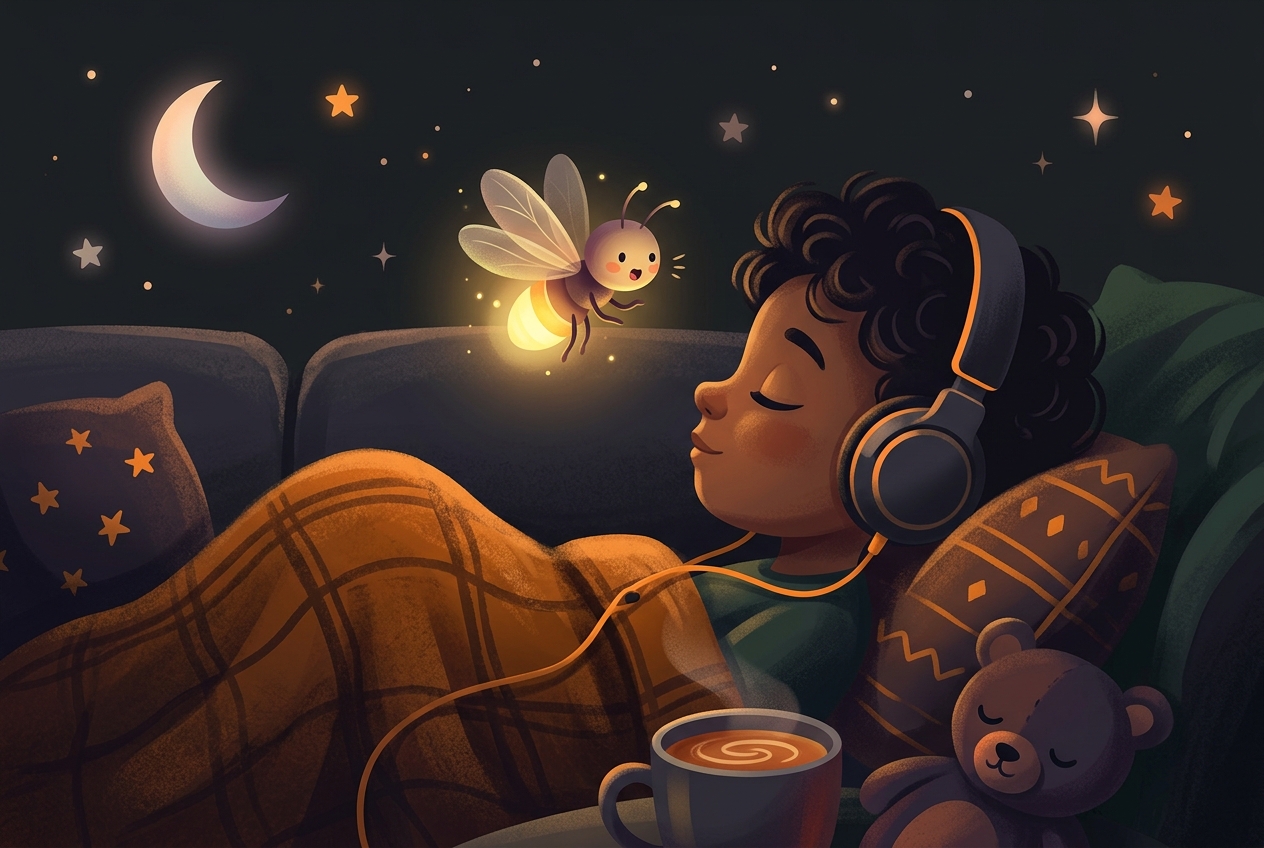
Dim the bedroom lights and begin an Ahkili personalized audio story. Immersing in an engaging acoustic narrative diverts mental energy away from rumination, lowering resting heart rates and facilitating a peaceful transition into restorative sleep.
4. Next-Day Collaborative Debrief
The following morning, casually revisit the story’s metaphor during breakfast: “Remember how our hero befriended the grumpy mountain wind last night? If the wind starts blowing in your chest at recess today, which magic whisper will you try?”.
Comparative Table: Parental Approaches to Childhood Tantrums
See how different parenting strategies compare when responding to childhood emotional storms:
| Evaluation Criteria | Punitive Reactions (Yelling, Time-Outs) | Screen / Digital Distraction (Tablets, Videos) | Ahkili Personalized Audio Stories |
|---|---|---|---|
| Immediate Neurobiology | Spikes cortisol and fear response | Temporarily masks arousal, rebound agitation | Rapidly slows heart rate, activates parasympathetic system |
| Emotional Literacy | Breeds shame and repressed feelings | Evades the emotion without skill acquisition | Teaches emotional vocabulary and body awareness |
| Parent-Child Bond | Creates oppositional friction | Replaces relationship with digital isolation | Fosters intimacy, safety, and mutual trust |
| Long-Term Coping | Higher risk of anxiety or rebellion | Creates dependency on external screens to soothe | Builds an internal toolkit of mental metaphors |
| Impact on Nighttime Sleep | Restless sleep and frequent nightmares | Blue light halts melatonin production | Encourages deep sleep and healthy circadian rhythms |
Frequently Asked Questions (FAQ)
At what age are temper tantrums most intense, and why?
Meltdowns peak between ages 18 months and 4 years, a developmental stage commonly termed the “terrible twos” and “threenager” phase. During this window, a child’s drive for autonomy and curiosity far outpaces their verbal fluency and fine motor skills, creating frequent moments of acute frustration that an immature nervous system cannot yet self-regulate.
Why does my child seem to save their biggest meltdowns exclusively for me?
Psychologists call this the “secure attachment collapse.” Children spend hours outside the home holding their impulses in check. If they explode the moment they see you, it is because you represent absolute unconditional security. You are the emotional anchor with whom they can safely take off their armor and unload their daily burdens.
Should I give in to my child’s demand just to stop a loud public tantrum?
Giving in to an original demand (buying a candy bar, extending arcade time) under public pressure reinforces the behavioral loop: your child learns that tantrums are an effective bargaining tool. Instead, address the emotion while holding the boundary. Move to a quieter spot, get down to their eye level, and say calmly: “I see how badly you wanted that toy and how mad you feel. The answer is still no, and I am right here with you until you feel peaceful again.”
Why is audio storytelling far more effective than video for calming angry kids?
Videos present intense, rapid visual stimulation and emit sleep-disrupting blue light that keeps children’s brains wired. Audio, by contrast, relies entirely on acoustic immersion, freeing the child to visualize their own soothing imagery. Listening in soft lighting induces a relaxed, meditative state that facilitates cognitive integration of positive behavioral models.
Can Ahkili adapt stories to a child’s unique personality and sensitive triggers?
Yes. Ahkili allows you to input your child’s exact age, specific passions (space exploration, magical animals, fairy castles), and their real-life behavioral hurdles (difficulty sharing, sibling rivalry, frustration over mistakes). The AI tailors both the plot and tone to your child’s developmental stage, delivering a respectful, captivating, and deeply therapeutic narrative experience.
This article was written in collaboration with Dr. Amel Slim, a child psychologist specializing in cognitive and emotional development. Pedagogical advisor for Ahkili.

